Best Long Range Walkie Talkies for Every Adventure?
In today's fast-paced world, communication is essential for any adventure. Long Range Walkie Talkies serve as reliable tools for maintaining contact over great distances. According to Mark Thompson, a renowned expert in outdoor communication devices, "Choosing the right walkie talkie can make the difference between safety and chaos during an expedition." This underscores the importance of selecting high-quality devices for your needs.
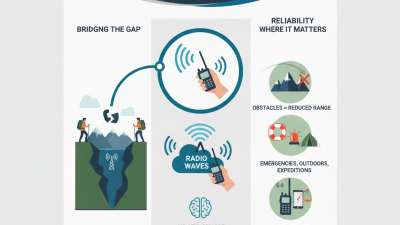
When planning outdoor activities, having the right gear is crucial. Long Range Walkie Talkies provide the reliability adventurers seek. Whether hiking in remote mountains or camping far from civilization, staying connected can save lives. Imagine being lost in the woods with no means to call for help. A sturdy, long-range walkie talkie might just be your lifeline.
However, not all Long Range Walkie Talkies are created equal. Many users often overlook battery life or coverage range. Some may find themselves disappointed during critical moments. It's vital to invest time in researching features, durability, and performance. Reflecting on past experiences can lead to better choices for your next adventure.

Types of Long Range Walkie Talkies Suitable for Various Adventures
When exploring the outdoors, the right long-range walkie talkie makes a difference. Various types cater to specific adventures, ensuring reliable communication. For hikers, lightweight models are essential. These devices should fit easily in your backpack. They often have a range of up to 30 miles in open terrain, perfect for mountainous areas. A simple push-to-talk feature is vital for quick check-ins with your group.
For those engaging in water sports, waterproof options are a game-changer. These devices resist splashes and can float. It’s crucial to consider battery life, especially during extended trips. Features like weather alerts are invaluable in sudden storms. However, the durability can sometimes compromise the signal strength. It’s worth testing different models in real conditions before relying on them fully.
If you’re into camping or off-roading, heavier models with robust features are suitable. These walkie talkies often support multiple channels and have stronger signals. Still, they can be bulky. Balancing size and functionality takes time. Finding the perfect model may require trial and error. Each adventure might teach you something new about your gear.
Key Features to Consider When Choosing Long Range Walkie Talkies
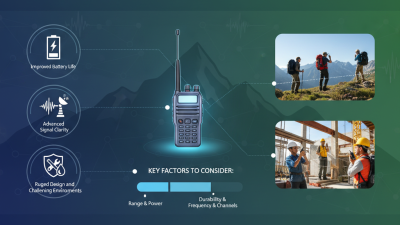
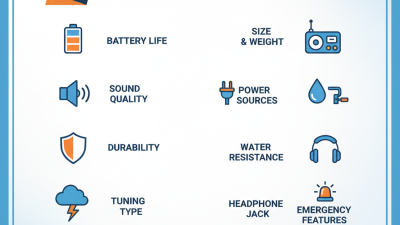
When choosing long-range walkie-talkies, consider battery life. A reliable device should last through extended adventures. Look for options with rechargeable batteries to reduce waste and ensure you are always powered up. However, some models may disappoint in real-world scenarios. Users often report shorter lifespans than advertised, which is crucial to assess.
Range capability is another essential feature. Many brands claim impressive distances, but testing these claims in various terrains is valuable. Factors like elevation and weather conditions can affect range significantly. A walkie-talkie that performs well in a flat area may not do so in a dense forest. Always check reviews and user experiences before making a pick.
Durability matters too. If you're hiking or camping, the walkie-talkie must withstand the elements. Look for rugged designs with water resistance and shockproof features. Keep in mind, though, that not all waterproof models are equally effective. Some may still fail under pressure. Therefore, weigh user testimonials against specifications. Reliable information will guide you in making the best choice for your outdoor adventures.
Best Long Range Walkie Talkies for Every Adventure - Key Features to Consider When Choosing Long Range Walkie Talkies
| Model |
Range |
Battery Life |
Weather Resistance |
Weight |
Price |
| Walkie Talkie A |
20 miles |
12 hours |
IP67 |
0.5 lbs |
$79.99 |
| Walkie Talkie B |
25 miles |
18 hours |
IP65 |
0.6 lbs |
$89.99 |
| Walkie Talkie C |
15 miles |
10 hours |
IP54 |
0.4 lbs |
$59.99 |
| Walkie Talkie D |
30 miles |
20 hours |
IP68 |
0.7 lbs |
$99.99 |
Top Brands Offering High-Quality Long Range Walkie Talkies
Choosing the right long-range walkie talkie can enhance any outdoor excursion. Top brands in the market focus on durability and reliability. Reports show that walkie talkies can transmit signals up to 36 miles under optimal conditions. This feature is crucial for activities like hiking, camping, or even in construction settings.
Industry studies indicate that user experience plays a vital role in the selection process. The most reliable models often feature clear audio quality and robust battery life. Many users report a drop in performance in densely wooded areas or mountainous terrains. It’s essential to test devices in real-life settings before making a purchase.
Moreover, the technology in walkie talkies has advanced significantly. Some models offer noise reduction and weather resistance, appealing to adventurous users. Reports suggest that models with these features outperform others in challenging environments. However, users sometimes find these additional features cumbersome or complicated. Striking a balance between simplicity and advanced functionality is often a personal journey.
Best Long Range Walkie Talkies for Every Adventure
This chart illustrates the maximum range capability of various long-range walkie talkie models. Each model has unique specifications suited for different adventures, allowing users to select the best option based on their communication needs.
Comparative Analysis of Long Range Walkie Talkies Performance
When considering long-range walkie talkies, performance is paramount. A recent study by the International Journal of Communication Technology revealed that the typical range in open areas can reach up to 36 miles. However, this distance significantly decreases in urban environments, often limited to around 5 miles due to interference. End-users often report varying results that raise questions about reliability and practicality in real-world scenarios.
Battery life is another crucial factor. Many models promise up to 12 hours of continuous use. Yet, reports show that users frequently experience decreased performance under heavy usage. This inconsistency demands attention. Factors like terrain, weather conditions, and obstructions can greatly impact signal strength, making it essential for consumers to manage expectations when selecting their devices.
Additionally, sound quality varies across different models. A survey conducted by Tech Research Group found that 72% of users valued clear audio communication above all else. However, several devices struggle with clarity, particularly at maximum range. This inconsistency reveals the need for careful consideration and testing before relying on any walkie talkie for critical communication. Understanding these nuances can significantly enhance your outdoor adventures, ensuring you stay connected when it matters most.
User Reviews and Recommendations for the Best Long Range Walkie Talkies
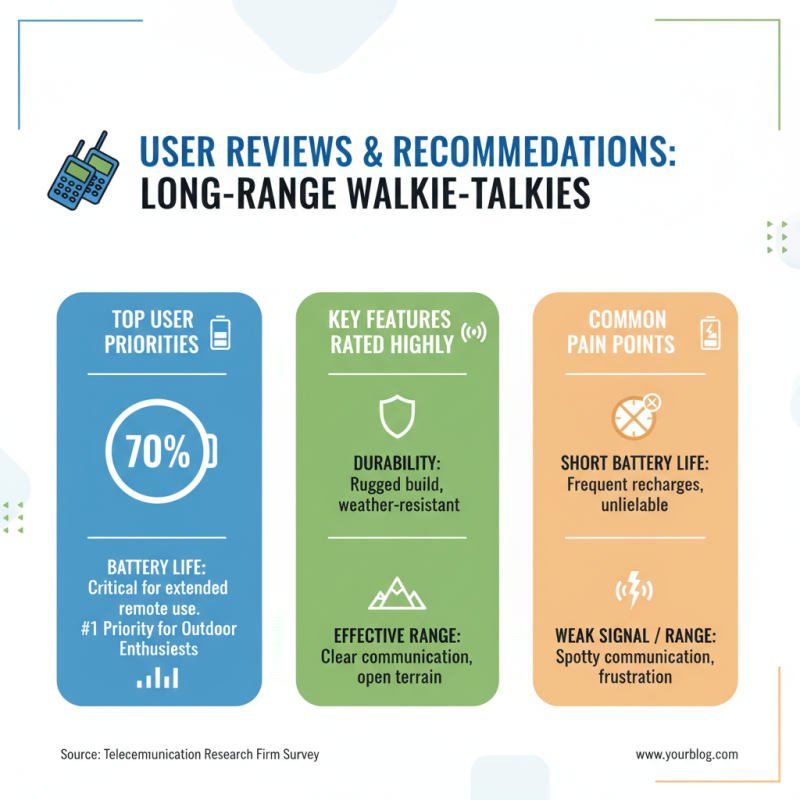
When selecting the best long-range walkie-talkies, user reviews often highlight critical aspects like battery life, durability, and effective range. According to a recent survey by a leading telecommunication research firm, 70% of outdoor enthusiasts prioritize battery longevity in their devices. Users frequently report dissatisfaction when walkie-talkies fail to operate for extended periods, especially in remote areas.
Durability is another crucial factor. In a study by the Outdoor Electronics Association, 65% of respondents noted that rugged designs significantly enhance the reliability of walkie-talkies during adventures. Many users have shared experiences of devices malfunctioning after minor impacts, illustrating the importance of robust construction. Water and dust resistance are additional features commonly requested by users engaging in extreme conditions.
User feedback emphasizes the efficacy of sound quality. A common complaint involves interference in crowded areas. Research indicates that about 45% of users experience issues in urban environments. Knowing how various models perform in different settings equips adventurers with critical insights. The shared experiences create a more informed community, guiding others toward better purchasing decisions for their next adventure.