How to Choose the Best Ski Walkie Talkies for Your Needs?
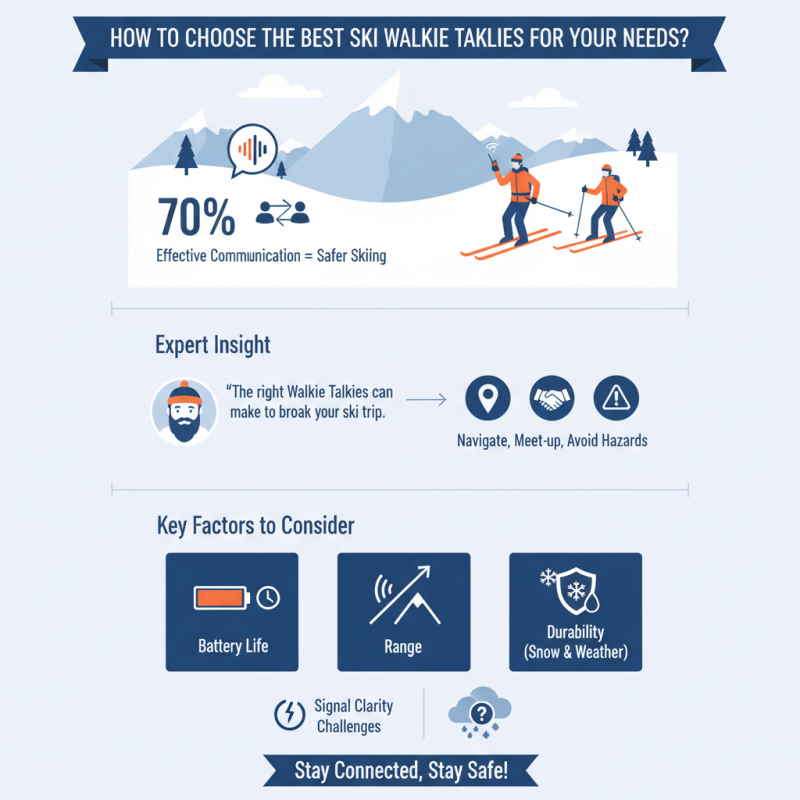
Choosing the right Ski Walkie Talkies can enhance your skiing experience. In the snow-covered mountains, effective communication is essential. A recent report from the Outdoor Industry Association highlights that 70% of skiers value reliable communication tools on the slopes. Ski Walkie Talkies play a crucial role in ensuring safety and coordination among friends and family.
Expert John Anderson, a renowned ski safety consultant, emphasizes this point: "The right Walkie Talkies can make or break your ski trip." Clear communication helps skiers navigate, plan meet-ups, and avoid potential hazards. However, not all Ski Walkie Talkies are created equal. Factors such as battery life, range, and durability need consideration.
Many users overlook these essential aspects. Choosing the wrong model can lead to frustrating experiences. For instance, a Ski Walkie Talkie with a limited range can cut off communication. Additionally, heavy snowfall can affect signal clarity. Reflecting on these challenges helps skiers make informed decisions. A well-chosen model can provide peace of mind while enjoying the slopes.
Key Features to Consider When Selecting Ski Walkie Talkies
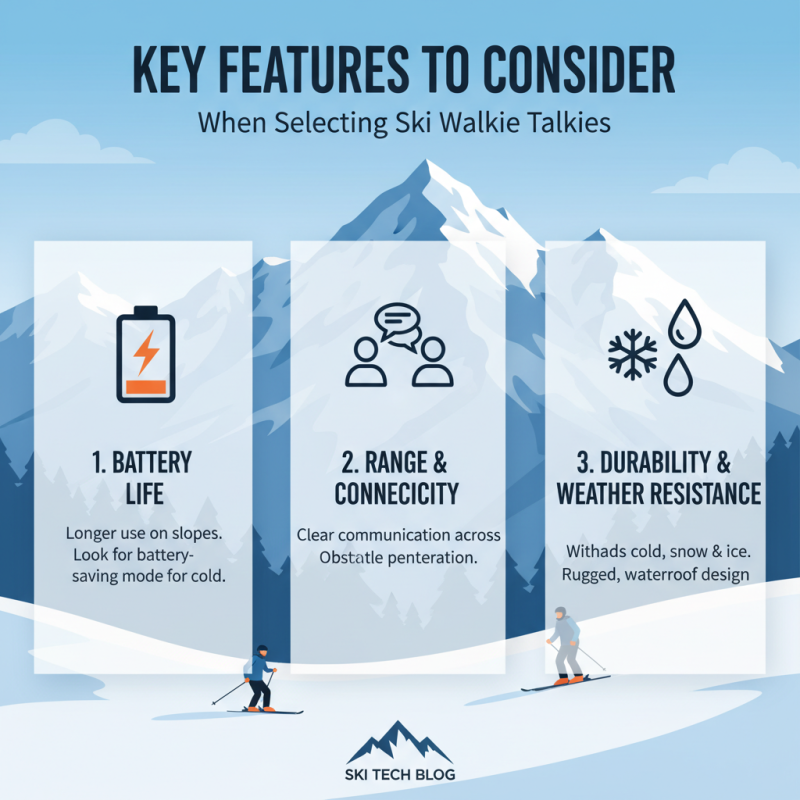
When choosing ski walkie talkies, several key features are essential. Battery life remains crucial for those long days on the slopes. A unit with a longer battery life allows for extended use without needing constant recharges. Look for models that offer a battery-saving mode, which can prolong usage in cold conditions.
Additionally, range is another vital aspect. Depending on the size of the ski area, you may need a walkie talkie that operates effectively over long distances. Choose devices with a clear range indication to ensure reliable communication. Another important feature is the weight and design. Lightweight models are easier to carry around. However, ensure they are robust enough to withstand the bumps and falls that can occur on the slopes.
Another point to reflect on is the ease of use. Ski gear can be cumbersome, so opt for walkie talkies with intuitive controls. If the buttons are too small or complicated, using them while wearing gloves becomes challenging. It’s easy to overlook this aspect, but you want a device that's simple. The goal is clear communication, not frustration in trying to operate the device. Aim for a balance of features that truly meet your skiing needs.
Frequency Range: Understanding UHF and VHF Options for Skiing
When skiing, communication is vital. Choosing the right frequency range for your walkie-talkies can shape your experience significantly. The two primary options are UHF (Ultra High Frequency) and VHF (Very High Frequency). Each has its unique strengths.
UHF typically performs well in dense areas, like forests, where obstacles are common. It penetrates structures better, offering clearer communication in most ski resort settings.
On the other hand, VHF excels in open spaces. Its longer range is beneficial for those skiing in backcountry areas with fewer obstructions. However, VHF may struggle in wooded or mountainous terrains.
Understanding the environments you’ll navigate is crucial. Evaluate your plans before selecting a frequency. A mix of both may serve diverse conditions, yet it often leads to confusion.
Users often overlook battery life, which is essential in cold conditions. Shorter battery life may reduce reliability, especially in remote areas. Test your devices thoroughly to gauge performance. Reflect on the terrains you frequent and consider how well your walkie-talkie maintains communication. Don’t disregard terrain variability when making a choice.
Communication needs can shift quickly in evolving snow and weather conditions.
Battery Life: Evaluating Power Sources for Extended Skiing Trips
When selecting ski walkie talkies, battery life is crucial. A study by the National Ski Areas Association highlights that extended skiing trips can last up to six hours. During such outings, a reliable power source can make or break your communication needs. Most ski walkie talkies use rechargeable lithium-ion batteries. However, performance varies widely across models.
Typical battery life ranges from 8 to 20 hours. It's essential to consider how often you plan to use the device. Some models with power-saving features can extend battery life significantly. The real challenge surfaces in cold, wintry environments where battery performance can drop. According to Battery University, colder temperatures can reduce a battery’s effective capacity by up to 40%.
Choosing a model with a removable battery allows for easy swaps during long durations. Users often find themselves wishing for longer-lasting batteries. Many forget to charge devices overnight before a big ski day. This oversight can lead to frustrating communications cuts, especially in remote areas. Evaluate both capacity and ease of use when selecting walkie talkies for skiing adventures.
Battery Life Comparison of Ski Walkie Talkies
This bar chart displays the estimated battery life (in hours) of various ski walkie talkie models on a single charge, helping you choose the best option for extended skiing trips.
Weather Resistance: Importance of IP Ratings for Outdoor Use
When selecting ski walkie talkies, weather resistance is crucial. Outdoor adventures can be unpredictable. Exposed to snow, rain, and wind, your devices need protection. IP ratings indicate a walkie talkie's durability against elements. Higher IP ratings mean better protection. For instance, IP67 means the device is waterproof and dust-tight.
Tips: Always check the IP rating before purchase. Aim for an IP rating of at least 54 for moderate protection. Consider how often you’ll use the device in wet conditions. Think about battery life too. A device can fail if it runs out of power in harsh weather.
Remember, walkie talkies often face extreme conditions. Poor visibility and freezing temperatures are common on the slopes. Even minor exposure can damage a less durable device. Take time to learn how your chosen walkie talkies perform in real-world scenarios. Do your research and read user reviews. This will help build your confidence in the product’s reliability.
How to Choose the Best Ski Walkie Talkies for Your Needs? - Weather Resistance: Importance of IP Ratings for Outdoor Use
| Model |
IP Rating |
Battery Life |
Range |
Weight |
| Model A |
IP67 |
20 hours |
5 miles |
0.5 lbs |
| Model B |
IP68 |
24 hours |
6 miles |
0.6 lbs |
| Model C |
IP55 |
18 hours |
4 miles |
0.4 lbs |
| Model D |
IP67 |
30 hours |
7 miles |
0.55 lbs |
Range and Reception: Assessing Performance in Mountainous Terrain
When selecting ski walkie talkies, range and reception are critical. In mountainous terrains, obstacles like trees and slopes can significantly interfere with signal quality. According to a recent study, clear line-of-sight communication can extend range beyond 2 miles. However, a dense forest or heavy snowfall can reduce this to less than half a mile.
Tip: Always test your walkie talkies in conditions similar to your skiing environment. This ensures you understand their limitations. Consider models with higher wattage for better performance in tough terrains.
It's important to assess the frequency range of walkie talkies. FRS radios offer limited range but require no license. GMRS radios can transmit over longer distances but demand a license for legal use. The choice depends on your needs. Engineers often recommend GMRS for ski trips due to its power.
Tip: Check if the radios support both FRS and GMRS frequencies. This versatility can enhance your communication, especially during emergencies. Reliability is paramount in backcountry skiing, where conditions can shift rapidly. A poor connection might lead to dangerous situations.