How to Choose the Best Communication Radios for Your Needs?
Communication radios play a crucial role in various sectors, from emergency services to outdoor activities. The global market for communication radios is projected to reach $30 billion by 2025, reflecting the growing demand for reliable communication. As businesses and individuals increasingly rely on these devices, selecting the right one can be challenging.
Different needs require different features. For instance, two-way radios excel in rugged environments, while digital radios offer clearer sound. According to industry reports, 70% of users prioritize battery life and range when making their choice. However, many overlook essential factors such as durability and ease of use. This lack of attention can lead to poor decisions, especially in critical situations.
Understanding your specific requirements is vital. Do you need long-distance communication for a large area? Or are you seeking a compact option for personal use? By reflecting on these questions, you can avoid common pitfalls. Many users purchase communication radios without thorough research, ultimately affecting their effectiveness. Making an informed choice ensures that your communication devices serve you well in their intended context.
Understanding Your Communication Needs and Environment
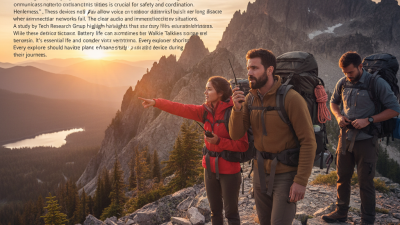
When choosing the best communication radios, it's essential to understand your specific needs. Consider the environment where you'll be using these radios. Are you in a dense urban area, or are you in remote locations? Different environments can affect signal strength and clarity. For instance, concrete buildings can block signals, while open spaces allow for clearer communication.
Think about the size of your team and your communication range. If you're coordinating a large group in a broad area, long-range radios will be necessary. However, if your communication is short-range, smaller, lighter models might suffice. Also, consider battery life. Longer-lasting batteries can be vital during lengthy events or emergencies.
Reflect on your comfort with technology. Some radios have complex features that may be overwhelming for less tech-savvy users. Simplicity can be more effective. Additionally, think about any unique challenges your team faces. For example, working in noisy conditions may require radios with effective noise-canceling features. Each decision shapes how effectively you communicate, so assess your situation carefully.
Types of Communication Radios and Their Features
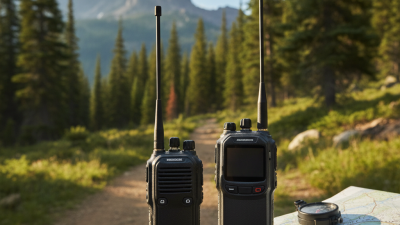
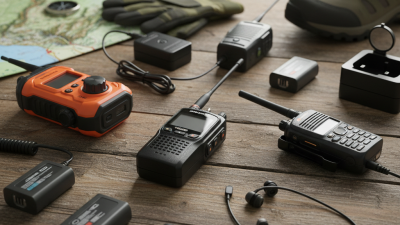
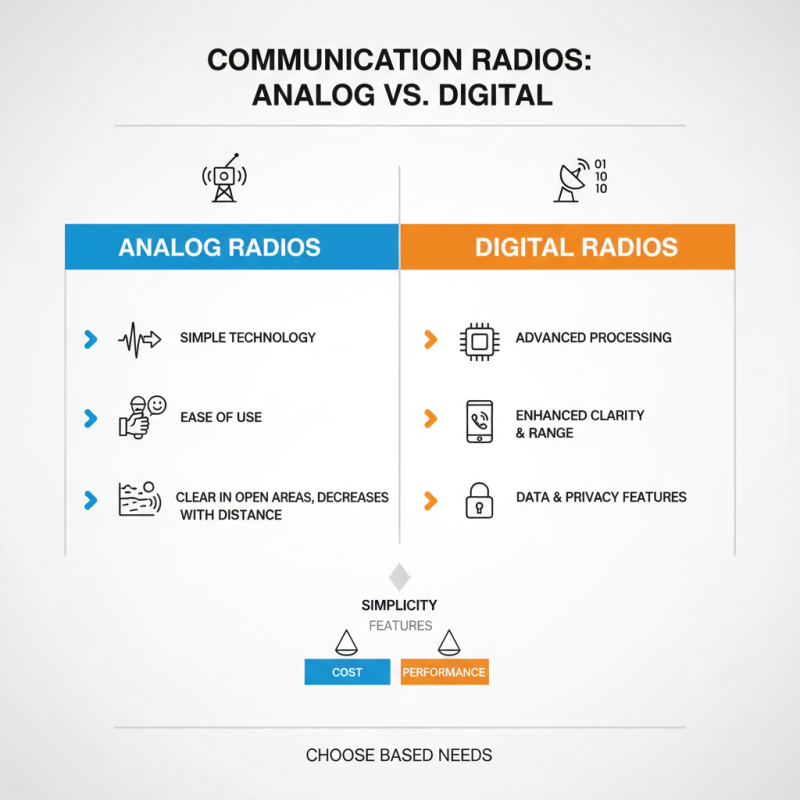
When choosing communication radios, it’s essential to understand the types available. Two common types are analog and digital radios. Analog radios use simple technology, often preferred for their ease of use. They transmit sound waves directly and can be effective in open areas. However, the sound clarity may decrease with distance.
Digital radios offer clearer sound quality and encrypted communication. They use advanced technology to transmit signals. This makes them ideal for crowded environments. Digital systems are often more versatile. Some can connect to other devices, enhancing communication capabilities. They might also have features like GPS tracking.
Consider battery life, range, and durability when selecting a radio. Long battery life is crucial, especially for outdoor use. A rugged design may be necessary for more demanding environments. It’s important to reflect on your specific needs. What works in one setting may not suit another. Explore different options to find the best fit.
Assessing Range, Battery Life, and Durability
When selecting communication radios, assessing range, battery life, and durability is crucial. Range determines how far your signal will travel. According to industry data, well-designed radios can achieve ranges from 2 to 36 miles, depending on the terrain. Urban environments can reduce effective range significantly. A radio claiming 20 miles may function only at 5 miles in dense areas.
Battery life is another vital consideration. Many radios boast of 10 to 12 hours of continuous use. However, real-life scenarios often differ. Factors like temperature, usage frequency, and power settings affect battery performance. A survey found that 30% of users reported battery life issues during critical moments. This is something users should reflect on when choosing their devices.
Durability is equally important, especially for outdoor activities. Radios are often rated using the IP code system. An IP67 rating signals water and dust resistance. However, many users find the radios do not perform as advertised after exposure to extreme conditions. Monitoring for wear and tear is essential to ensure longevity. Opt for radios made from robust materials to withstand drops and impacts in rugged environments.
How to Choose the Best Communication Radios for Your Needs?
| Feature |
Entry Level |
Mid Range |
High End |
| Range |
Up to 1 mile |
Up to 5 miles |
Up to 20 miles |
| Battery Life |
12 hours |
24 hours |
48 hours |
| Durability |
Basic, indoor use |
Water-resistant |
Rugged, shockproof |
| Price Range |
$20 - $50 |
$50 - $150 |
$150 - $500 |
| Common Uses |
Casual use, small gatherings |
Outdoor activities, small teams |
Professional events, construction sites |
Evaluating Price and Brand Reputation
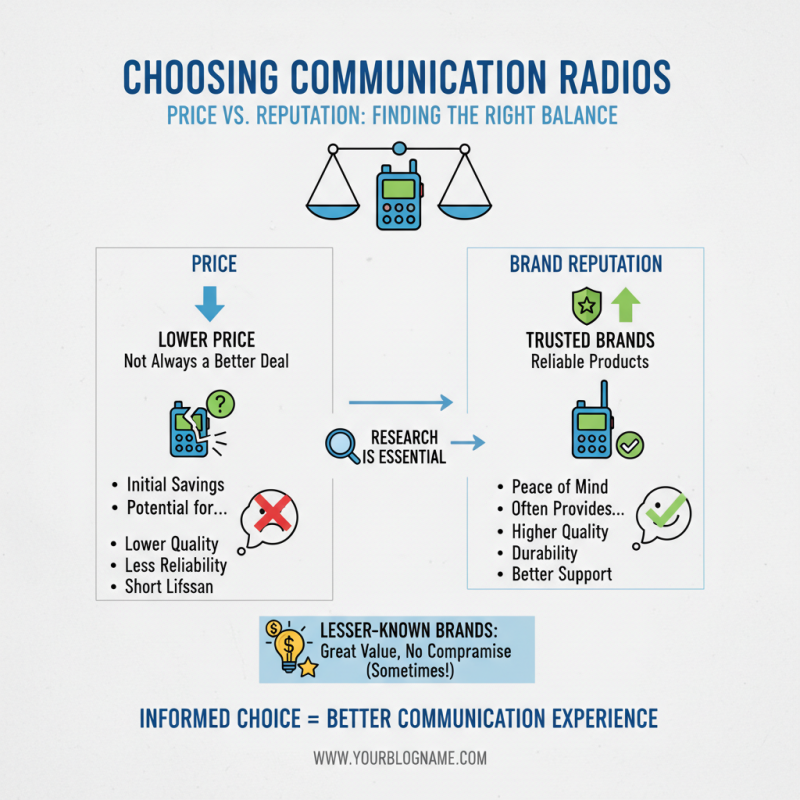
When selecting communication radios, evaluating price and brand reputation is crucial. A lower price doesn’t always mean a better deal. Brands with a strong reputation often provide reliable products. When you trust a brand, you can have peace of mind. However, it’s essential to research. Some lesser-known brands may offer great value without compromising quality.
Tips: Look for user reviews. Real experiences provide insight into performance. Ensure the product meets your needs. Check if the brand offers good customer support. This can be vital if you encounter issues.
Another point to consider is warranty options. A solid warranty indicates the manufacturer stands behind their product. But, remember that a high price does not guarantee quality. Be cautious of flashy marketing. Sometimes, the most expensive options don’t deliver superior performance. Focus on features that matter most to you, rather than just brand prestige.
Practical Tips for Testing and Using Communication Radios
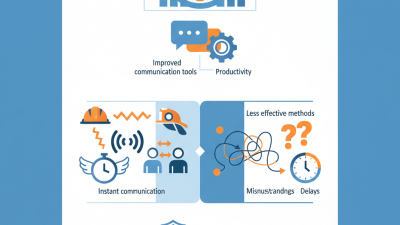
When choosing communication radios, testing and familiarization are crucial. A report by the International Telecommunications Union indicates that effective communication can increase productivity by up to 25%. However, not all radios perform equally. First, consider the range. Test how well the radio transmits in various environments. In urban settings, signals can be weak. Check how the radio performs indoors versus outdoors.
Quality matters. Evaluate battery life, as some radios last mere hours. A study by the Consumer Technology Association found that 60% of users value long battery life when selecting communication devices. Short battery life can disrupt communication in critical moments.
Tips: Always test the audio clarity. A radio may look good but fail to deliver clear sound. Listen for distortions and background noise. Furthermore, assess the weight and handling. A bulky design can hinder effective communication. Find one that feels comfortable in hand. Each user’s needs vary, so personal experience is key. Understanding these aspects can lead to a much more satisfying choice.
Understanding Communication Radio Features