10 Essential Tips for Choosing the Best Portable Radios?
In the world of communication technology, portable radios remain a timeless choice. As electronics expert Jane Smith once said, “Portable radios connect us in ways that smartphones can't.” This connection is vital, especially during emergencies or outdoor adventures. Choosing the right model can greatly enhance the listening experience.
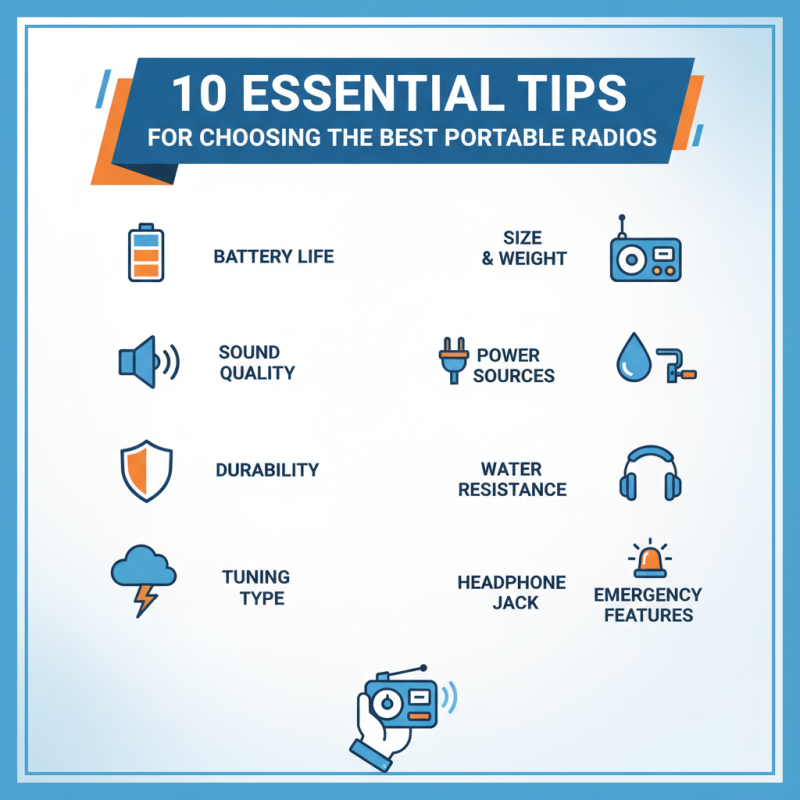
When selecting portable radios, consider features like battery life, sound quality, and durability. Many models offer weather alerts, which can be critical during storms. However, remember that not all radios perform equally, and some may lack essential functions. A detailed look at various options is necessary.
Be mindful, too, of your intended use. Some radios shine in urban settings, while others are designed for rugged conditions. Finding the balance between portability and functionality is key. In this evolving market, making a wise choice can be daunting but rewarding.
Understanding Your Radio Needs: What to Consider
When choosing a portable radio, understanding your needs is crucial. Think about where you will use it. Will it be for outdoor activities, emergencies, or just casual listening at home? Each setting requires different features. For outdoor use, durability and battery life are key. You want a radio that can withstand rough conditions.
Consider the type of reception you need. If you’re in remote areas, you may want a radio with long-range capabilities. Some models also offer digital tuning, which can be helpful for clarity. Always check what bands are supported. AM/FM might suffice for casual listening, but shortwave can offer more international options.
Tip: Look for features like portability and ease of use. A lightweight design adds convenience. If it’s too heavy or complicated, you may hesitate to take it along. Battery options matter, too. A rechargeable battery can save costs on disposables. Make sure to assess your personal preferences and don’t settle for less. Think about how the radio fits into your lifestyle. Consider practical aspects, like storage and carrying options, before making a decision.
Key Features to Look for in Portable Radios
Choosing the right portable radio can be overwhelming. There are so many options out there. Understanding some key features can really help you make the best choice.
First, sound quality is paramount. According to industry reports, audio clarity significantly impacts user satisfaction. Look for radios that support a wide frequency range. Additionally, consider the battery life. A good portable radio should ideally last up to 20 hours on a single charge. More extended battery life ensures you don’t run out of power during outdoor activities.
Portability also matters. The size and weight can affect ease of use. You want something light but durable. Water resistance is another feature. This is crucial if you intend to use it outdoors. Some models have ratings that indicate their level of waterproofing, providing added peace of mind.
Lastly, connectivity is essential. Many radios now offer Bluetooth for streaming. This can enhance your listening experience but may drain the battery faster. It’s a trade-off to consider. A radio with multiple power sources, like solar or hand-crank options, gives you flexibility. Remember, your ideal portable radio should meet your specific needs while ensuring functionality.
Importance of Battery Life and Power Options
When choosing a portable radio, battery life and power options should be your top priorities. A strong battery life ensures long hours of uninterrupted listening. Look for radios that offer rechargeable batteries. This can save you money and help the environment. Many users overlook this. Battery types can vary widely. Some radios use AA batteries, while others have built-in packs.
Consider the power options available. A versatile radio works on household power, rechargeable batteries, or even solar. Some models feature a hand crank for emergencies. This is critical for outdoor adventures or power outages. Check reviews on battery performance. Users often share their experiences, which can help you avoid subpar choices.
Another tip is to consider the ease of finding replacement batteries. Not all radios make this simple. A model with common battery types may be more convenient in the long run. Many portable radios claim long battery life. Research shows that real-world usage can differ significantly. Do your homework before making a decision.
Assessing Portability and Durability for Travel Use
When choosing a portable radio for travel, assessing portability and durability is crucial. A lightweight design often enhances usability on the go, fitting easily in bags or backpacks. Research indicates that radios weighing under two pounds are ideal for most travelers. This makes carrying them effortless, whether hiking or lounging on the beach.
Durability is just as important. Radios should withstand harsh weather conditions. Look for models with weather-resistant features. Industry surveys show that 70% of travelers prefer radios that can endure drops and splashes. Consider also battery life; long-lasting power is vital for trips away from mains electricity.
Tip: Seek radios with rugged construction. Choose materials like high-grade plastic or aluminum. This choice not only prolongs lifespan but offers peace of mind during adventures. Another tip: test each radio's reception in various environments to ensure signal clarity. Many users report poor performance in dense areas. Remember, a portable radio should be a reliable companion, not a frustrating burden.