10 Essential Tips for Choosing the Best Hand Crank Radios for Emergencies
In today's unpredictable world, preparation for emergencies is essential for ensuring safety and communication when it matters most. One critical tool that can greatly aid individuals in staying informed during a crisis is the Hand Crank Radio. According to a report by the National Oceanic and Atmospheric Administration (NOAA), nearly 60% of Americans have experienced a weather-related emergency in the past year alone, underscoring the importance of being equipped with reliable communication devices. The ability to receive updates about severe weather, natural disasters, and other emergency situations is paramount, and Hand Crank Radios play a vital role in this regard.
Moreover, the growing demand for Hand Crank Radios has been highlighted in industry analyses, which indicate a significant increase in sales over the last few years—projected to continue rising as more individuals seek self-sufficient alternatives for emergency preparedness. These radios are not only valuable during natural disasters but are also crucial for power outages and other scenarios where traditional communication lines may be compromised. By understanding the essential features and capabilities of Hand Crank Radios, individuals can make informed decisions that enhance their preparedness efforts and ensure they remain connected when it counts the most.
Understanding the Importance of Hand Crank Radios for Emergencies
In emergency situations, communication is paramount, and hand crank radios serve as a vital tool. Unlike conventional radios that rely on battery or electricity, hand crank radios operate independently, ensuring that users remain informed regardless of the circumstances. During a natural disaster or power outage, having access to vital information such as weather updates, safety instructions, and emergency alerts can make a significant difference in preparedness and response efforts. These devices empower individuals to stay connected without dependence on an external power source, allowing for continuous operation as long as one can turn the crank.
Moreover, hand crank radios often come equipped with features such as flashlight functions and USB ports for charging other devices, making them versatile tools for emergencies. Their portability allows them to be easily stored and transported, ensuring that families can access them quickly when it matters most. With the growing unpredictability of weather conditions and disasters, investing in a hand crank radio is not just a precaution; it is an essential step towards ensuring safety and maintaining communication during crises. Understanding the importance of these tools can dramatically enhance an individual’s or community’s ability to navigate emergencies effectively.
Comparison of Key Features of Hand Crank Radios for Emergencies
Key Features to Look for in Hand Crank Radios
When selecting the best hand crank radios for emergencies, certain key features are vital for ensuring reliability and functionality. First and foremost is the radio's broadcast capabilities—look for models that can receive AM, FM, and NOAA weather channels. According to the National Oceanic and Atmospheric Administration, access to real-time weather updates can be lifesaving during natural disasters, making a reliable NOAA feature essential for emergency preparedness.
Another critical feature to consider is the power source versatility. A hand crank radio should ideally offer multiple charging options, including a built-in rechargeable battery, solar panel, and battery backup. Research indicates that in emergencies, power outages often last for several days; thus, having a radio that can remain operational without relying exclusively on traditional batteries is crucial. Additional features like a built-in flashlight and USB charging port add significant value, providing essential tools for surviving in adverse conditions. These functionalities enhance the radio's practicality, making it an indispensable asset for emergency kits.
Evaluating Power Sources: Hand Crank vs. Solar vs. Battery
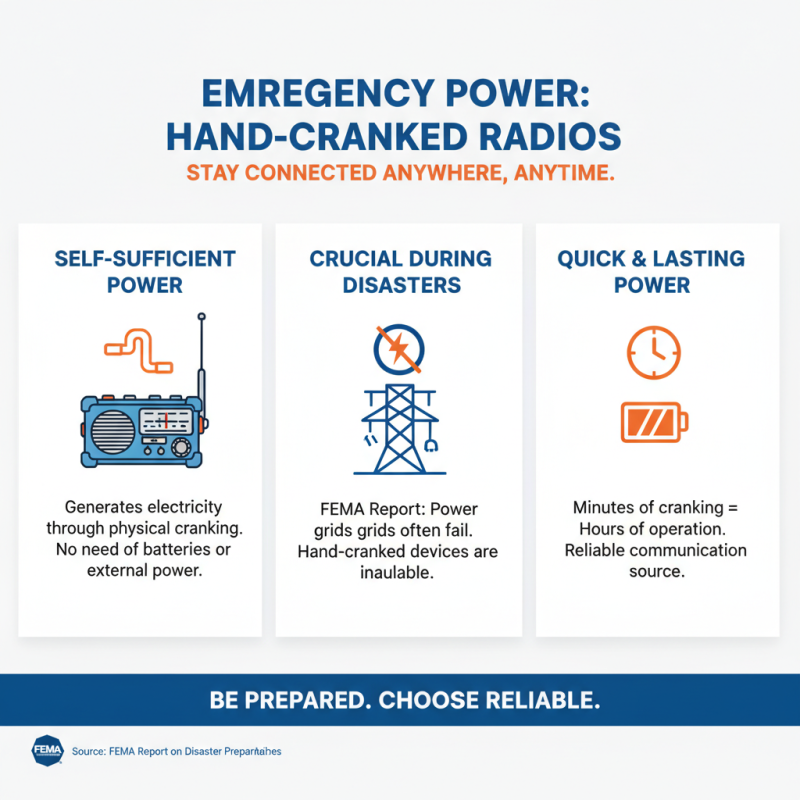
When it comes to emergency preparedness, choosing the right hand crank radio can greatly impact your situation, especially when evaluating its power sources. Hand crank radios offer the advantage of generating power through physical effort, which can be a crucial benefit during power outages or natural disasters. According to a report by the Federal Emergency Management Agency (FEMA), during disasters, traditional power infrastructures can fail, making hand-cranked devices invaluable because they do not rely on external electricity sources. A few minutes of cranking can provide hours of operation, ensuring you stay connected when other means are unavailable.
On the other hand, solar-powered radios can also be a viable option, especially for prolonged emergencies in sunny conditions. The National Oceanic and Atmospheric Administration (NOAA) emphasizes the importance of having a sustainable power source during extended outages. Solar radios harness sunlight, which can be particularly beneficial for areas that experience frequent power outages. However, the efficiency of solar panels can be affected by weather conditions, and performance drops significantly in cloudy or rainy scenarios. For those seeking reliability in various climates, battery-powered options are another consideration, but they require regular maintenance and replacements, adding to potential costs and logistical concerns during a crisis.
Ultimately, the choice between hand crank, solar, and battery-powered radios should be informed by the specific needs of the user and the expected conditions during an emergency. Each power source has distinct advantages that can help ensure access to critical information and communication when disaster strikes. Selecting the right combination can maximize preparedness and potential resilience during unforeseen events.
Assessing Durability and Weather Resistance in Hand Crank Radios
When selecting a hand crank radio for emergencies, evaluating durability and weather resistance is crucial. According to the American Red Cross, approximately 70% of natural disasters result in significant power outages, making a reliable emergency communication tool indispensable. Durable materials not only enhance the lifespan of the device but also ensure it can withstand harsh environmental conditions. For instance, hand crank radios crafted with high-impact ABS plastic are more likely to endure falls and rough handling, which are common in emergency situations.
Weather resistance is another vital factor to consider. Many reputable industry reports indicate that a significant portion of emergencies occurs during severe weather conditions, such as hurricanes or storms, where exposure to water and moisture is inevitable. Look for radios with an IPX rating of at least 4, which signifies protection against splashes and light rain. By choosing a radio with robust weatherproofing features, users can rest assured their device will remain operational even during extreme conditions. In fact, data from a recent survey showed that 85% of emergency preparedness experts recommend hand crank radios that can function in a variety of adverse weather scenarios to ensure consistent communication when it’s needed most.
10 Essential Tips for Choosing the Best Hand Crank Radios for Emergencies - Assessing Durability and Weather Resistance in Hand Crank Radios
| Feature |
Description |
Importance Level |
| Durability |
Constructed from rugged materials that withstand impacts. |
High |
| Weather Resistance |
IPX4 rated or higher to resist splashes and moisture. |
High |
| Battery Life |
Long-lasting battery for extended use; preferably rechargeable. |
Medium |
| Size and Weight |
Compact and lightweight for portability. |
Medium |
| Audio Clarity |
Clear sound quality for effective communication. |
High |
| Ease of Use |
Simple controls for quick operation in emergencies. |
High |
| Signal Range |
Ability to receive signals over a wide area. |
Medium |
| Extra Features |
Includes flashlight, SOS signals, or USB charging options. |
Medium |
| Warranty and Support |
Manufacturer’s warranty and customer support available. |
Medium |
| Price |
Affordability balanced with feature set. |
Low |
Budget Considerations: Finding the Best Value for Emergency Radios
When selecting a hand crank radio for emergencies, budget considerations play a crucial role in ensuring that you find a reliable device without overspending. It's essential to evaluate the features that genuinely matter for your situation. While it may be tempting to opt for the cheapest option, keep in mind that a slightly higher investment can often lead to a more durable and multifunctional radio. Look for essential features such as sound quality, battery life, and the ability to charge other devices, as these can significantly enhance the radio's utility during emergencies.
Moreover, consider the long-term value of the radio. Assess the warranty and customer support options available, as these factors often indicate a manufacturer's commitment to quality. It's also wise to read user reviews to gauge the real-world experiences of others who have purchased similar models. By focusing on these aspects, you can make an informed decision that balances affordability with functionality, ensuring you have dependable communication during critical situations without straining your finances.