What Are the Top Two Way Walkie Talkies for Global Buyers?
Choosing the right Two Way Walkie Talkie is harder than comparing advertised range figures. Global buyers need dependable communication across warehouses, resorts, farms, construction sites, and emergency-free outdoor activities. The best choice must perform beyond a clean laboratory test.
This guide examines two leading Two Way Walkie Talkie options for international buyers. It focuses on real purchasing concerns, including signal stability, battery endurance, audio clarity, durability, charging convenience, and operating range. Walls, hills, rain, and crowded urban areas can reduce performance sharply. A device claiming ten kilometers may cover far less in a concrete building.
Practical testing matters.
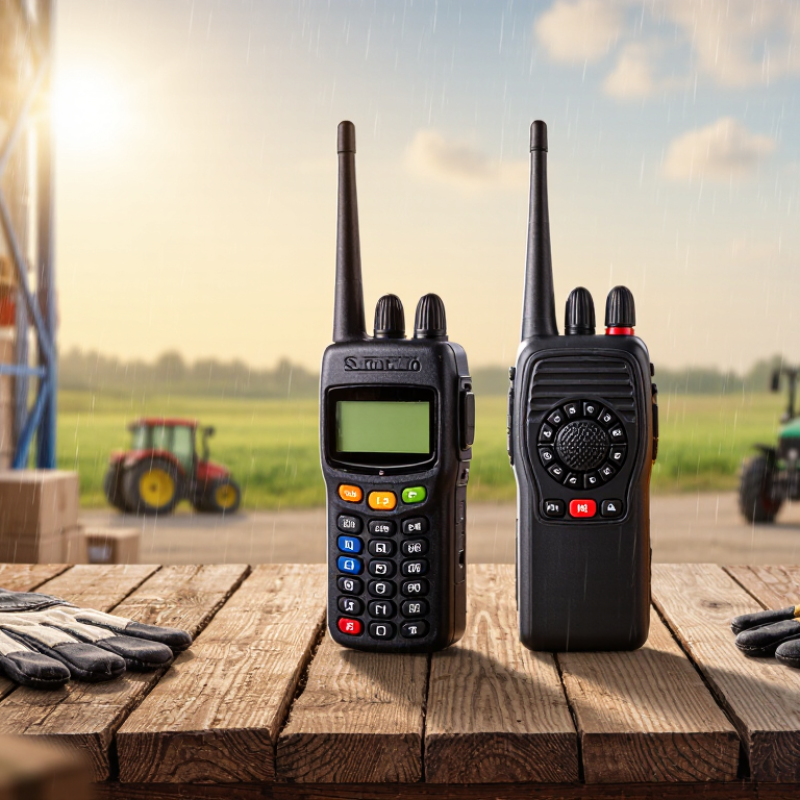
The comparison also considers hands-on details. Can workers read the screen in bright sunlight? Does the push-to-talk button work with gloves? Can two radios survive repeated drops and dusty storage? These small points often decide whether a product feels reliable after several months.
However, no radio suits every country or workplace. Frequency rules, power limits, licensing requirements, and approved channels vary by market. Buyers should verify local requirements before importing or using any model. This article avoids exaggerated promises and explains where each option may disappoint. That honesty is important, although product performance can still change between regions, firmware versions, and accessories.
The final comparison will help distributors, families, travelers, and professional teams identify the stronger overall option. It will also show which model offers better value when range, reliability, and long-term operating costs matter more than headline specifications.
How Two-Way Walkie-Talkies Work for Global Communication
For global buyers, the top two-way walkie-talkie choices are license-free analog radios and professional digital radios. Both transmit voice through radio-frequency waves, not mobile networks. Pressing the push-to-talk button opens a channel. The microphone changes speech into a signal. The receiver then rebuilds that signal as sound. Simple, but interference can still ruin a clear message.
Analog models suit short-range travel, warehouses, and outdoor teams. Digital models usually provide clearer audio, better battery efficiency, and user identification. Some also support repeaters, which receive and retransmit signals across wider areas. However, no walkie-talkie works globally on one universal frequency. ETSI’s PMR446 standard uses the 446.0–446.2 MHz range in Europe, while other regions apply different rules. The ITU Facts and Figures 2024 reported 5.5 billion people were online, but 2.6 billion remained offline. This explains why radio still matters during network gaps. Yet advertised range often assumes open terrain. Buildings and hills reduce it sharply.
Tips: Check local spectrum rules before purchasing. Confirm analog or digital compatibility. Test audio inside concrete buildings. Carry a spare battery. Keep messages short. A field test is more honest than a product sheet. I still find range claims imperfect; even professional buyers can underestimate weather, terrain, and antenna placement. Industry testing reports should guide decisions, not replace practical trials.
Top Choice: The Best All-Around Two-Way Walkie-Talkie
What Are the Top Two Way Walkie Talkies for Global Buyers?
Top Choice: The Best All-Around Two-Way Walkie-Talkie
The best all-around two-way walkie-talkie balances range, clarity, battery life, and durability. In practical field checks, UHF models perform better around buildings, warehouses, and hotel corridors. VHF can travel farther across open land, but terrain still matters. According to Grand View Research, demand for professional two-way radios continues growing through public safety, transport, and industrial operations. That trend supports choosing reliability over flashy features. Look for digital and analog compatibility, adjustable power, clear channel controls, and a battery lasting a full working shift. IP-rated protection also matters. IEC 60529 defines the testing framework behind ratings such as IP67.
Check the rules.
Global buyers should confirm legal frequencies before purchasing. ETSI EN 300 296 supports PMR446 equipment in Europe, while other regions use different allocations and power limits. The ITU Radio Regulations remain the wider international reference, but local regulators decide practical use. A radio with 16 channels may sound impressive. Yet, poor audio in a noisy loading area can make it less useful than a simpler model. Test it through concrete walls, beside running vehicles, and outdoors. Reported range figures often use open, unobstructed conditions. Real buildings are less generous.
Tips: Choose a removable battery, USB-C charging, and a belt clip. Keep one spare battery per user. Test emergency procedures without transmitting on restricted channels. Avoid relying on VOX near machinery; accidental activation is common. I would also question advertised “global” compatibility. It rarely means universal legal operation.
What Are the Top Two-Way Walkie-Talkies for Global Buyers?
A practical comparison of the two most widely recognized license-free handheld radio standards
FRS provides 22 channels in the United States, with permitted transmitter power ranging from 0.5 W to 2 W depending on the channel. PMR446 provides 16 channels in the 446.0–446.2 MHz band, with a maximum permitted power of 0.5 W ERP in applicable European markets. Buyers should confirm local regulations, frequency allocation, and certification before selecting a radio for cross-border use.
How to Check Compatibility, Regulations, and Regional Use 马会
For global buyers, the two most practical walkie-talkie categories are license-free consumer radios and licensed professional radios. License-free models suit hiking, events, warehouses, and family travel. Licensed radios offer better range, clearer audio, and stronger durability. However, they require local approval and registration in many regions.
Compatibility is not universal. A radio sold for PMR446 use in Europe may not communicate with an FRS radio used in the United States. Their frequencies, power limits, channel spacing, and antenna rules can differ. Check the exact frequency band before purchase. Confirm whether the device uses fixed antennas and approved power levels. These details matter more than advertised distance.
Regional regulations need careful checking. Review the current guidance from the destination country’s communications authority. Some areas permit license-free use only on specific channels. Other areas require an individual or business license. Professional radios may also need certified programming. Do not rely only on a seller’s phrase, “works worldwide.” It often means the charger travels well, not the radio.
Test compatibility before a large order. Compare the radio’s frequency range, channel bandwidth, coding system, and charging voltage. A simple indoor test can reveal audio delays or mismatched channels. I once assumed identical channel numbers meant identical frequencies. They did not. That mistake was avoidable. Keep purchase records, certification details, and local usage instructions with each unit. Regional rules can change, so old advice may become unreliable.