Top Walkie Talkie Set Features You Should Know About?
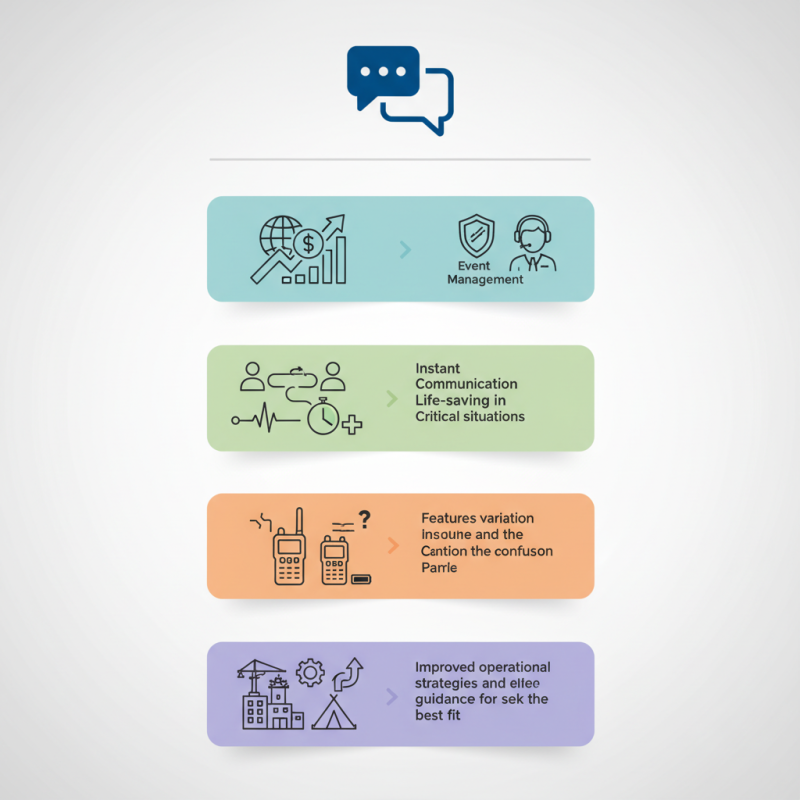
In the world of communication devices, the Walkie Talkie Set remains a vital tool. According to a recent report by MarketsandMarkets, the global walkie-talkie market is expected to reach $3.38 billion by 2026, driven by increased demand in sectors like security and event management. Industry expert, Dr. Emily Chen, emphasizes, “Walkie Talkie Sets enhance efficiency in environments where instant communication is critical.”
These sets provide an immediate line of communication. This rapid connectivity can save time and even lives in critical situations. However, not all Walkie Talkie Sets are created equal. Features vary widely, which can lead to confusion. Many users overlook crucial specifications, like range and battery life. It’s essential to understand what you need from your device.
Every workplace presents different challenges. The right Walkie Talkie Set must match those challenges. From construction sites to outdoor events, options are abundant. Reflecting on this, the market shows room for improvement. Users should seek guidance to ensure they select the best fit. Understanding these elements can enhance your operational strategies significantly.
Key Features for Effective Walkie Talkie Communication
When choosing walkie talkies, several key features enhance communication. One important aspect is range. It determines how far you can communicate effectively. Depending on terrain, the range can vary significantly. Open areas allow for longer distances, while hills or buildings may obstruct signals.
Another crucial feature is battery life. A walkie talkie with a short battery may fail during crucial moments. Always assess the expected usage. Rechargeable batteries are convenient but can run out unexpectedly. While some models claim long battery life, real-world usage can differ.
Sound clarity impacts communication quality. No one wants to struggle to understand a message. Look for models with noise cancellation features. This can filter out background noise. However, some devices may still struggle in windy conditions. Lastly, durability matters, especially in outdoor settings. Water-resistant designs are ideal but can be misleading. Always consider how you will use the device. Each feature adds to the overall effectiveness of walkie talkies in various environments.
Top Walkie Talkie Set Features You Should Know About
| Feature |
Description |
Importance |
| Range |
The maximum distance over which the devices can communicate. |
Crucial for effective communication in various environments. |
| Battery Life |
Duration the walkie talkie can operate on a full charge. |
Important for prolonged usage without the need for recharging. |
| Durability |
Resistance to water, dust, and physical impacts. |
Ensures longevity in challenging environments. |
| Privacy Codes |
Additional codes that limit interference from other users. |
Enhances secure communication among users. |
| Channel Options |
Number of available channels for communication. |
Provides flexibility in crowded areas. |
| Ease of Use |
User friendliness of the device, including buttons and interface. |
Essential for quick and effective communication. |
Range and Signal Quality: What You Need to Know
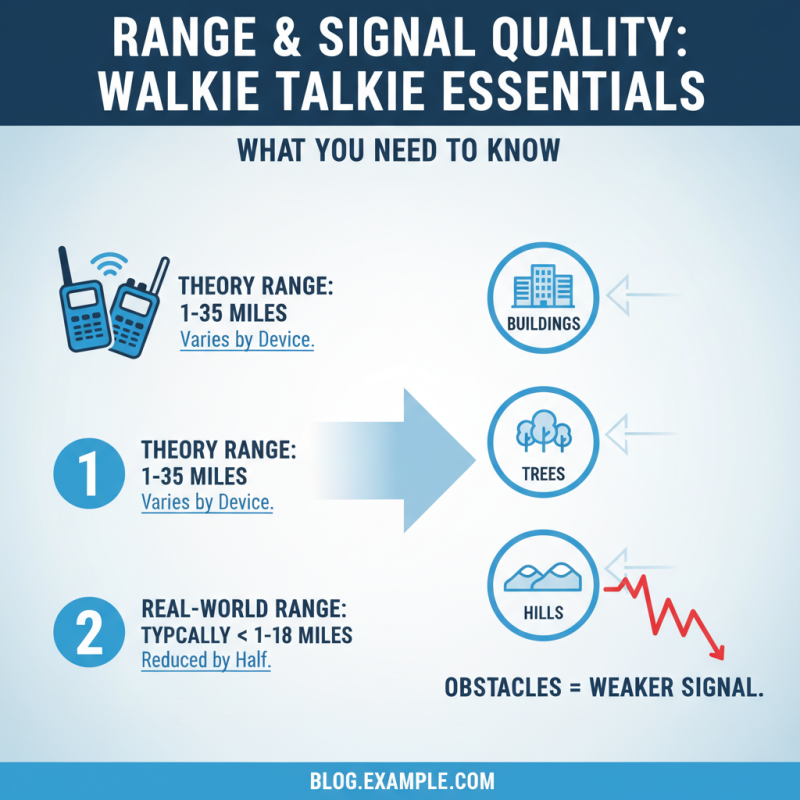
When considering walkie talkies, range and signal quality are crucial. The effective range can drastically vary among devices. Most models offer a range of 1 to 35 miles. However, real-world conditions often reduce this by half. Buildings, trees, and hills can diminish signal strength.
According to a report by the Federal Communications Commission (FCC), the actual usable range depends on frequency and terrain. VHF is better for open areas but struggles in urban environments. UHF, on the other hand, is more reliable in densely populated settings. Still, some users report frustration with inconsistent reception, which often results from nearby electronic interference. A study revealed that 30% of users experience poor signal quality in certain locations.
It's also essential to factor in battery life when evaluating performance. A walkie talkie can have a fantastic range but may not last long enough for extensive use. Many devices offer a typical battery life of 12 to 24 hours. However, some users find this insufficient for their needs. Regular charging is necessary, which can be inconvenient during long excursions. Balancing range, signal reliability, and battery life can be a challenging task for users.
Battery Life and Charging Options for Walkie Talkies
Battery life is a crucial factor when choosing walkie talkies. Most models offer varying battery capacities. According to industry reports, many devices last between 12 to 30 hours on a single charge. This wide range reflects differences in design and intended use. Users often overlook how battery life impacts their experience.
Charging options are another key feature. Many walkie talkies use rechargeable lithium-ion batteries. Some models come with impressive fast-charging capabilities. Others rely on traditional charging methods, which can be tedious. A survey indicated that 40% of users prefer devices with flexible charging options. This flexibility is essential for outdoor activities, where access to power may be limited.
Not all walkie talkies are created equal. Factors like power settings and usage frequency greatly influence battery performance. For example, using high power settings drains batteries faster. Users may find themselves needing to recharge more often than expected. This can lead to frustration, especially during extended trips. An ideal walkie talkie should balance performance and battery efficiency.
Additional Functionalities: From Weather Alerts to Privacy Codes
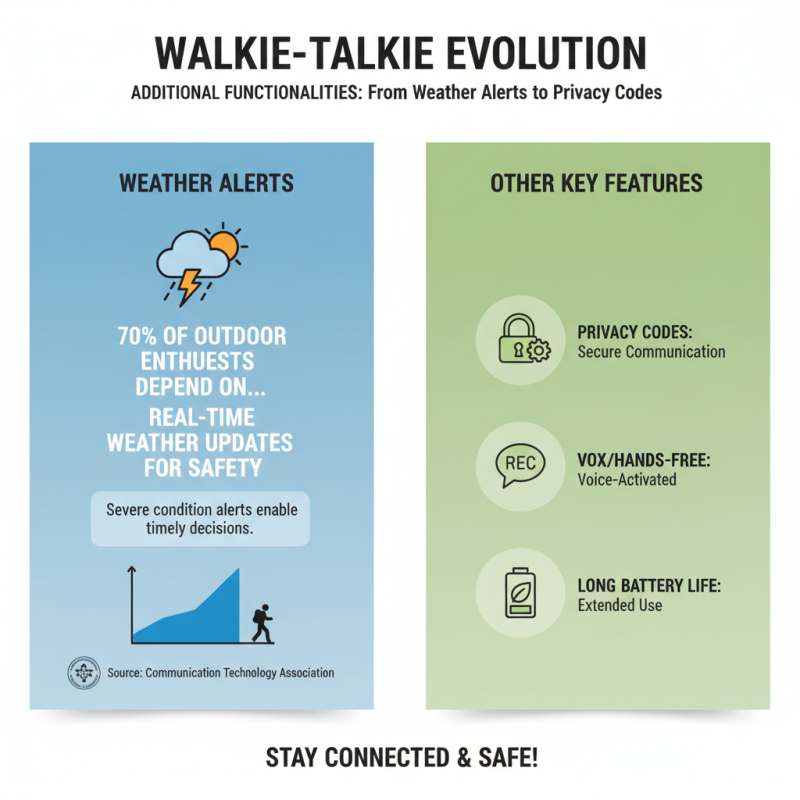
Walkie talkies have evolved significantly, offering many features beyond basic communication. One of the key functionalities is weather alerts. Research from the Communication Technology Association shows that 70% of outdoor enthusiasts depend on real-time weather updates for safety. These alerts can inform users about severe weather conditions, enabling timely decisions during outdoor activities.
Another important aspect is privacy codes. Studies indicate that nearly 30% of users have experienced interference from other walkie-talkie users. Implementing privacy codes can greatly reduce this issue. Users can communicate securely without worrying about outsiders overhearing their conversations. It's essential for professional use, such as in construction sites or security services, where confidentiality is critical.
However, not all walkie talkie sets leverage these features effectively. Some models may lack a range for urban environments. Others might have limited battery lives, rendering the advanced functionalities nearly useless during prolonged use. It is crucial to prioritize these aspects when choosing a walkie talkie set. Users often overlook these details, leading to frustration when they need reliable performance the most.
Durability and Design: Choosing Walkie Talkies for Various Environments
When choosing walkie talkies, durability and design are crucial. Different environments demand specific features. Robust construction is essential for outdoor use. Look for models that can withstand drops and harsh weather. Water resistance is a must in rain-prone areas. Lightweight designs are easier to carry, especially for long hikes.
The battery life is another critical aspect. Frequent charging can disrupt communication. Some walkie talkies might not last a full day. It’s wise to consider models with energy-efficient options. Functional design enhances usability, too. A comfortable grip makes handling easier in tough situations. Buttons should be intuitive, not too small to fumble with.
Many overlook the importance of range. The advertised range may not reflect real-world conditions. Obstacles like hills and buildings can reduce performance. Testing several models in your usual environment is helpful. While aesthetics may seem secondary, a good design improves the user's experience. Everyone's needs vary; it’s important to reflect on what works best for you.
Walkie Talkie Durability Comparison