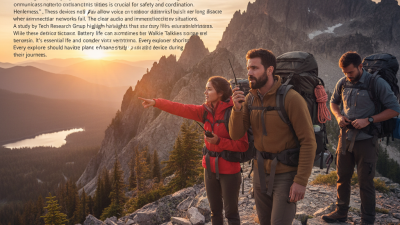
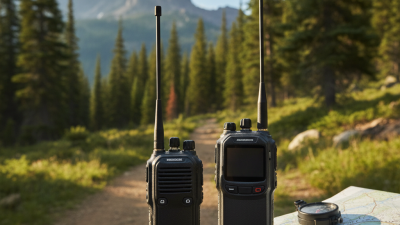
In an increasingly connected world, effective communication remains vital. Walkie Talkie Phones offer a unique blend of simplicity and reliability. These devices enable users to converse over long distances without the need for cellular networks. Imagine being on a remote hiking trip or coordinating a large event. The convenience of a Walkie Talkie Phone is undeniable.
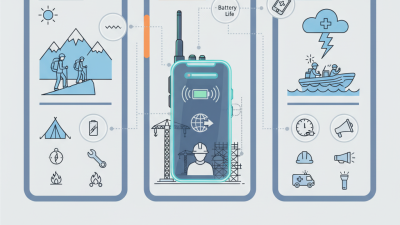
Modern Walkie Talkie Phones come with a variety of features. Some models offer long battery life and enhanced range. Others include advanced noise-cancellation technology. These enhancements create a clearer and more enjoyable communication experience. However, not all devices are perfect. Some may suffer from poor audio quality or limited reach. It's essential to consider these factors when choosing the right device.
Walkie Talkie Phones can be perfect for outdoor enthusiasts, event planners, or family activities. They provide quick and easy communication in various settings. Yet, users must balance functionality with their specific needs. The goal is to find a Walkie Talkie Phone that aligns with individual requirements. Making an informed choice can lead to improved interactions and better connections.

Walkie talkie phones serve as essential communication tools in various settings. They combine the features of traditional walkie talkies with smartphone capabilities. Users benefit from instant push-to-talk communication. This feature is crucial for quick updates in busy environments. Families, outdoor enthusiasts, and professionals can all find value in these devices.
Key features often include long-range transmission and durability. Many models operate over significant distances, making them ideal for hiking or camping. They often come with built-in weather alerts. This feature can be life-saving in unpredictable outdoor conditions. Many devices also offer multiple channels. Users can switch frequencies to avoid interference. However, battery life can be a concern. Some units drain quickly, especially when used frequently.
It's important to consider usability too. A complex interface can be frustrating. Devices with straightforward designs are more user-friendly. Portability plays a significant role in any device's design. Lightweight models are easier to carry on adventures. Yet, balancing size with battery capacity remains challenging for manufacturers. Improvements are needed to enhance functionality.
When choosing a walkie talkie phone, several factors come into play. Range is critical. Consider how far you need to communicate. Some devices work well in urban areas, while others are better for open spaces. Battery life is another essential element. Long hikes or events require units that will last all day. A dead device is useless.
Durability matters too. Walkie talkie phones should withstand drops and water exposure. Some models are rugged and designed for outdoor use. Think about ease of use as well. A complicated interface can lead to frustration in emergencies. Look for devices with large buttons and clear displays.
Lastly, think about additional features. Noise cancellation, privacy codes, and emergency alerts can enhance communication. However, too many features can complicate things. Finding a balance is tricky. You want technology that simplifies communication, not confuses it. Evaluate your specific needs to choose wisely.
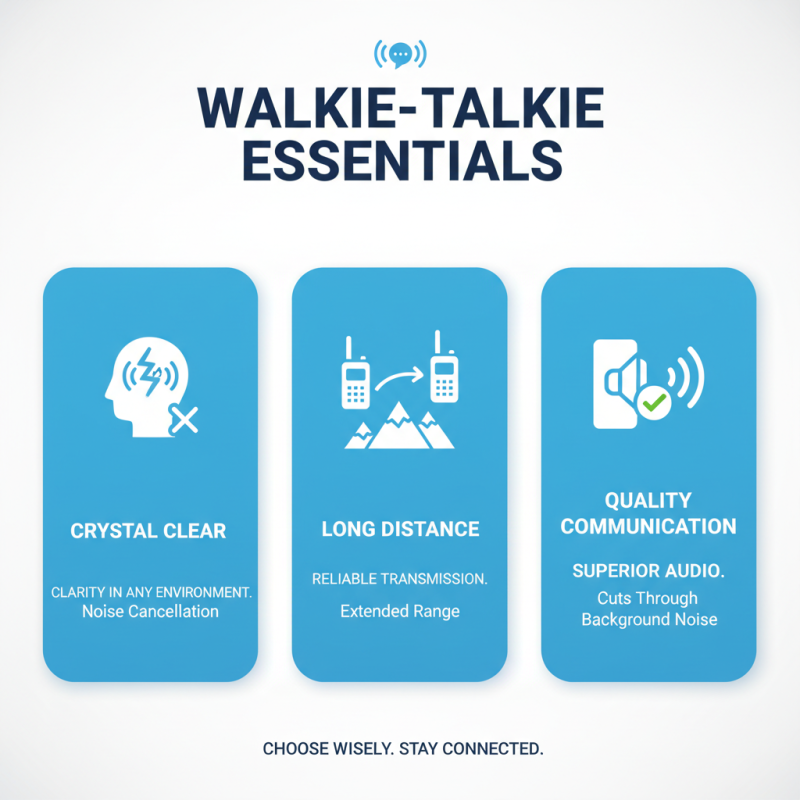
When choosing the right walkie talkie phone, clarity is essential. Users often desire clear communication in challenging environments. A good walkie talkie should offer reliable transmission over long distances. It's not just about the range; the quality matters too. Look for models that cut through background noise. Features like noise cancellation can make a difference.
Battery life is another critical aspect. Many walkie talkies struggle with longevity. Users find themselves frequently recharging devices. A walkie talkie that lasts all day is invaluable for outdoor adventures. Ensure it also has a durable design. Frequent drops can lead to damage. Rain or dust resistance is a plus. These factors are essential in real-world scenarios where conditions can change rapidly.
Ergonomics also play a role in usability. Some walkie talkies feel bulky, making them hard to handle. They should be lightweight and easy to grip. Communication should feel natural, not cumbersome. While many features exist, the best devices each have unique strengths and weaknesses. Finding the right balance is challenging but rewarding.
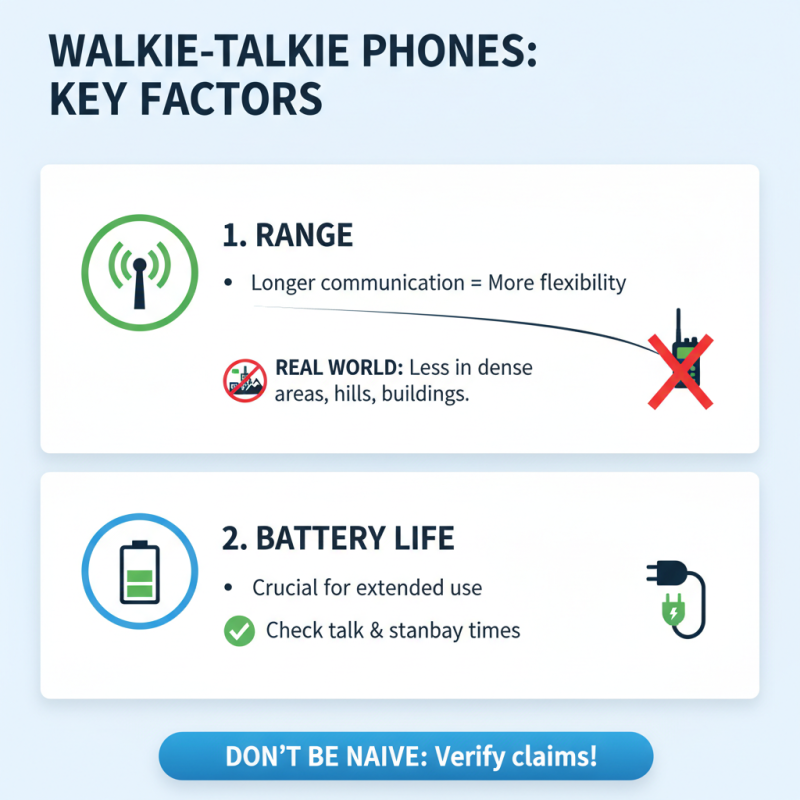
When selecting walkie talkie phones, range and battery life are critical factors. A long communication range allows for more flexible movements. Many models claim impressive ranges, but real-world performance can vary. Dense environments often limit effective distance. Hills or buildings can create dead zones. Thinking a device's range can overcome these obstacles is naïve.
Battery life plays an equally important role. Some devices boast extended battery life, but user experiences reveal inconsistencies. High usage can drain batteries much faster than expected. It’s essential to consider how often you'll use the device. Charging frequently can be a hassle. Users sometimes neglect to recharge after heavy usage. This oversight can lead to frustrating communication failures.
Testing the range in actual conditions is vital. Conduct trials in different surroundings. Pay attention to signal strength during conversations. Monitor the battery levels regularly. These practical assessments will highlight each device's strengths and weaknesses. Understanding these factors helps inform a smarter purchase decision.
When choosing a walkie-talkie phone, user experience is crucial. Clear communication can make or break essential moments in any setting. Many users report that range is critical. A device with a limited range can lead to frustrating moments. Users recommend testing distance in real use cases. Some walkie-talkies struggle to connect in urban areas due to obstacles.
Battery life also plays a significant role in communication. Users have noted devices that die quickly hinder effective communication, especially during long events. A user once mentioned how their phone failed during a hike, leading to confusion. This highlights the need for reliable battery performance.
Sound quality is another factor. Users have shared mixed experiences. Some devices offer crystal-clear audio, while others produce static and noise.
Durability matters too. Walkie-talkies often face tough environments. Users have found that weatherproof designs resist damage, faring better than less robust models. Remember, every user's needs are different.
Trying out devices before making a choice is wise. Take feedback seriously, as real-world use often reveals critical flaws. Adapt to your surroundings and needs, and your communication will improve significantly.