Leave Your Message

Why Are Ski Walkie Talkies Essential for Global Buyers?

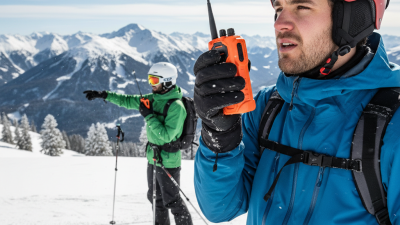
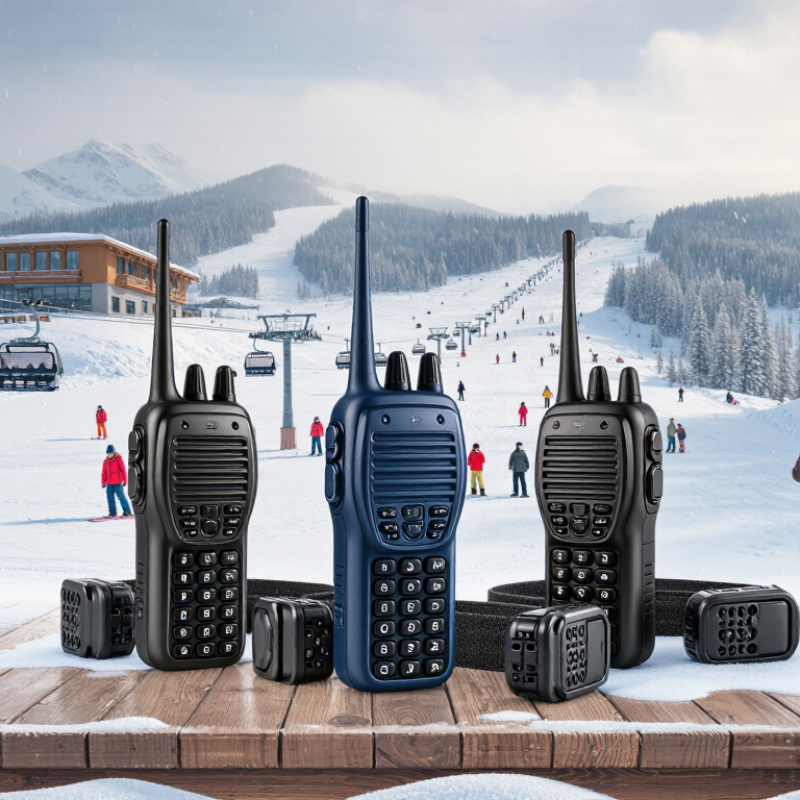
Ski Walkie Talkies have become practical communication tools for resorts, tour operators, families, and ski patrol teams. Their value becomes clearer as mountain traffic grows. The National Ski Areas Association reported approximately 61.5 million skier visits in the United States during the 2023–2024 season, one of the industry’s strongest results. More people create more coordination challenges across lifts, slopes, lodges, and remote trails.

Distance matters. So does weather.

The Outdoor Industry Association’s 2024 Outdoor Participation Trends Report recorded continued growth in outdoor recreation participation, including snow sports and other cold-weather activities. Meanwhile, the World Meteorological Organization warns that rapidly changing mountain weather can increase operational uncertainty. In these conditions, a dependable radio can support quick updates when mobile signals weaken, gloves limit screen use, or groups separate near a tree line. Buyers should examine battery performance, cold-weather durability, channel flexibility, audio clarity, and accessory compatibility rather than focusing only on advertised range. Range claims often reflect open terrain, not crowded ski areas. That is an important limitation.

Global sourcing also requires technical discipline. Radio equipment must meet the applicable spectrum, labeling, and product-safety requirements in its destination market. The European Commission’s Radio Equipment Directive framework and the U.S. Federal Communications Commission’s rules illustrate why one configuration may not suit every country. Professional buyers should request test documentation, user manuals, warranty terms, and after-sales support before placing large orders. Ski Walkie Talkies are not simply gadgets for snowy weekends. They are compact coordination systems, although even the best model cannot replace trained staff, clear procedures, and sensible mountain judgment.
Why Are Ski Walkie Talkies Essential for Global Buyers?

What Are Ski Walkie Talkies and How Do They Work?

Ski walkie talkies are compact, two-way radios designed for mountain communication. They use a push-to-talk button, a shared channel, and a rechargeable battery. Unlike mobile phones, they can work without cellular coverage. One person speaks, while others listen, creating a half-duplex conversation. UHF signals often perform well around resort buildings, but terrain, snowbanks, and tree lines reduce range. The advertised distance is rarely the real distance.

This matters as skiing participation grows. The Outdoor Industry Association’s 2024 Outdoor Participation Trends Report recorded 58.7 million U.S. participants in skiing and snowboarding. More users mean more crowded slopes and greater coordination needs. Global buyers should also understand that radio frequencies, power limits, and licensing requirements differ by country. ITU Radio Regulations provide the international framework, but national authorities control local use. A compliant device in one market may need different settings elsewhere. That detail is easy to miss.

Tips:
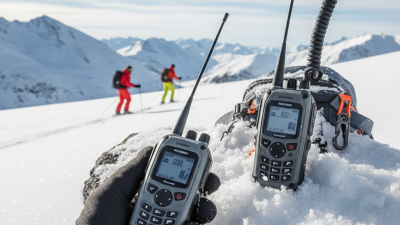
  • Test the radio with gloves before skiing.
  • Keep it inside a chest pocket, not an exposed jacket sleeve.
  • Confirm battery performance below freezing.
  • Use clear channel labels, such as “base” and “lift.”
  • Do not trust range claims blindly.
  • In my experience, simple controls matter more than extra features. A screen can still be difficult to read in blowing snow.

Which Safety and Communication Needs Do They Address?

On a ski slope, distance changes quickly. A partner may disappear behind trees, ridges, or heavy snowfall. Ski walkie talkies keep short instructions available when phones lose signal. Guides can report a safe meeting point, changing weather, or a blocked trail. Clear voice contact also helps families and group leaders reduce confusion during busy runs.

Their main value is practical coordination. One person can stay with an injured skier while another contacts the rest of the group. Patrol teams can share location details, risk observations, and route changes without stopping to type. Many units support hands-free use, which matters when gloves, poles, and steep terrain limit movement. A bright display and tactile controls are useful in low light. Battery performance deserves close attention, especially on long, cold days.

Global buyers should check operating requirements in the destination country before purchase. Frequency access, permitted power levels, charging systems, and weather ratings may differ. Compatibility between units is not automatic, even when product descriptions look similar. Test every device with gloves and helmets before a trip. I have seen teams trust a radio too quickly; walls, storms, and poor placement can weaken communication. It is not magic. A backup plan still matters, including agreed signals and meeting points.

What Features Should Global Buyers Compare?

Global buyers should compare ski walkie talkies by real mountain performance, not advertised distance. The National Ski Areas Association reported 61.1 million skier visits in the 2023–24 season. That scale makes reliable group communication important. Start with range tests in trees, valleys, and crowded lift areas. A claimed 10-kilometre range may shrink sharply behind ridges. Check independent testing, not only laboratory figures.

Cold-weather design deserves close attention. Compare operating temperature, battery type, and charging options. Lithium batteries often lose performance in freezing conditions, so a removable spare can matter at minus 15°C. Look for an IP rating tested under IEC 60529. IP67 offers stronger protection against snow, slush, and brief water immersion than basic splash resistance.

Buttons should work with gloves. The screen must remain readable in flat, white light. Frequency compatibility is equally important for international purchasing. In Europe, PMR446 equipment follows ETSI requirements, while other regions may use different approved bands and power limits. Buyers should verify local regulatory approval before importing or distributing radios.

Compare channel quantity, privacy-code functions, headset support, emergency calling, and USB-C charging. The National Ski Areas Association’s safety research also highlights the value of clear communication during incidents, although a radio cannot replace trained patrol services. That point is easy to overlook. Marketing claims are often too optimistic. A practical field trial with thick gloves, a wet jacket, and a half-charged battery may reveal more than a glossy specification sheet.

How Do Regulations and Frequencies Vary by Country?

Ski walkie-talkies are essential when mobile signals weaken between mountain ridges, lift stations, and forest trails. Yet a radio that works legally in one country may be unsuitable elsewhere.

Frequency rules differ widely. In many European markets, licence-free radios commonly use the PMR446 band, with strict power and antenna limits. North American allocations differ, with some channels licence-exempt and higher-power services requiring authorization. Japan, Australia, and other markets use their own frequency plans, channel spacing, and approval systems. Small details matter.

Check the local telecommunications regulator before importing or using any device. Confirm the permitted band, transmission power, channel spacing, and equipment certification. A radio legally sold in one country may not meet another country’s technical requirements. It can also create interference near airports, rescue services, or protected communication networks.

Mountain conditions add practical concerns. A skier may press the transmit button wearing thick gloves, while wind covers a weak speaker. Test the radio in cold conditions, not only inside a warm shop. Battery performance can also fall sharply below freezing. I once assumed that more channels meant better communication. That was not always true. Clear, legal channels mattered more.

Ask suppliers for a country-specific compliance document, not just a frequency list. Confirm whether programming can be locked to approved channels. Keep purchase records and user instructions with the equipment. Rules can change, and online advice may become outdated. A local check remains the safer choice.

How Can Buyers Evaluate Quality, Range, and Supplier Reliability?

Why Are Ski Walkie Talkies Essential for Global Buyers?

How Can Buyers Evaluate Quality, Range, and Supplier Reliability?

Ski walkie talkies must survive cold lifts, wet snow, and frequent drops. Buyers should inspect housing seals, button size, speaker clarity, and battery performance below freezing. A clear voice matters when helmets cover both ears. During field testing, users should wear gloves and test controls on a moving slope. Laboratory claims help, but real snow exposes weaknesses. One overlooked detail is charging speed between short mountain sessions.

Tips: Request production samples, not only showroom units. Test open-area range, then repeat the test among trees and buildings. Ask for battery results at low temperatures. Check whether spare batteries and charging accessories are available. Range numbers often describe ideal conditions. Treat them carefully.

Supplier reliability requires more than a quick quotation. Experienced buyers should review inspection records, quality procedures, response times, and warranty terms. Ask how defects are recorded and replaced. A dependable supplier provides consistent samples, clear documentation, and realistic delivery schedules. Regional radio requirements should also be confirmed before shipment. Certification documents need verification, not blind trust. I have seen attractive samples fail after repeated charging, so a small pilot order remains sensible. Communication can still go wrong. Written specifications reduce that risk.