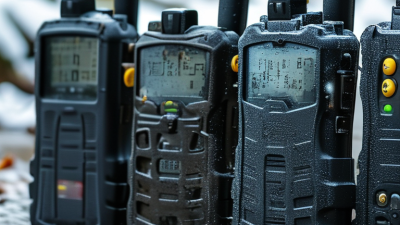
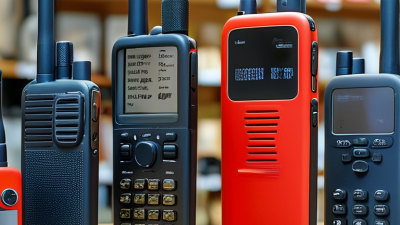
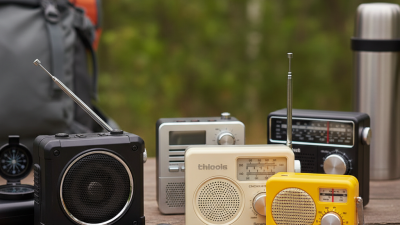
When power fails, a radio can provide weather alerts, local updates, and a little reassurance. Hand Crank Radios are often marketed as dependable emergency tools, but their usefulness depends on more than a crank. Reception quality, battery capacity, charging options, and clear controls all matter when conditions are stressful.
This guide compares the features that help distinguish the best models in 2026. It considers AM/FM reception, NOAA weather alerts, USB charging, built-in lights, and durability. Small details matter. A bright display may be hard to read at night, while a compact design may be easier to store but less comfortable to operate. Cranking can help in a pinch, though it may not provide enough energy for every device or situation.
The right choice depends on where and how you plan to use it. A household preparing for outages may value dependable alerts and several power options. A camper might prioritize weight, reception, and a sturdy handle. Not every model excels. Manufacturer claims can also leave out practical limits, so compare published specifications with independent testing when available. Check how long the radio plays after charging, whether alerts work in your area, and how easily you can tune stations. This overview aims to make those trade-offs clear, without treating any one radio as a perfect solution. A little skepticism helps. The best emergency radio is one you can operate, keep charged, and trust to meet your actual needs.
A hand-crank radio turns your arm’s motion into electrical energy. Inside, a small generator spins as the handle moves, producing current through electromagnetic induction. A circuit then adjusts that current to charge an internal battery or capacitor. The stored energy powers the radio after you stop cranking. It is a simple system, but not effortless.
Cranking speed and pressure affect the energy produced. A few steady minutes may provide enough power for a brief broadcast, but results vary by model and battery condition. Runtime ratings need context. They may describe radio playback on a full charge, not the time gained from one minute of cranking. Volume, signal strength, and features such as a flashlight can also change how quickly stored power runs down.
Check what the rating actually measures. Small print matters.
In a real outage, cold weather or tired hands may make the handle harder to turn. I would treat advertised runtimes as estimates, not promises, and test the radio at home before relying on it.
A capable hand-crank radio should tune all seven NOAA Weather Radio frequencies: 162.400, 162.425, 162.450, 162.475, 162.500, 162.525, and 162.550 MHz. These are broadcast channels, not interchangeable labels. NOAA’s National Weather Service describes NWR as a continuous source of weather and hazard information, delivered through a network of more than 1,000 transmitters. That range matters. In a storm, a radio that cannot receive the local channel may leave you with static, even if its flashlight works perfectly. Check the tuning specifications before buying, and test reception where you plan to keep it.
NOAA’s NWR coverage information notes service reaches about 95% of the U.S. population, but terrain, buildings, and distance from a transmitter can weaken reception. A basement room or metal-sided vehicle may be a difficult place to get a clear signal. Crank radios also vary in how long they play after charging, so treat runtime claims as estimates, not guarantees. I would test the crank, antenna, and alert function at home; I have learned that a feature is only useful when you know how it behaves.
Tips: Extend the antenna fully and scan all seven channels. Store the radio near a window, then check reception every few months. Keep spare batteries if the model supports them.
A strong hand-crank radio comparison starts with watt-hours, not just a large mAh label. For example, a 10,000 mAh battery rated at 3.7 volts stores about 37 Wh before conversion losses. USB output runs at a different voltage, so the usable energy is lower. Treat that number as an estimate, not a promise. A capacity label can still mislead.
Check the USB port’s stated voltage and current, then compare its wattage: 5 V at 1 A delivers 5 W, while 5 V at 2 A delivers 10 W. USB-IF’s USB Power Delivery 3.1 specification allows up to 240 W, but that is a protocol ceiling—not a radio’s actual output. Most radios provide far less. For crank charging, look for a measured rate, such as minutes of cranking for a stated amount of playback or battery gain. Claims without test conditions are hard to compare. In practice, output may vary with crank speed and battery condition.
Tips: Test the radio with a USB meter and stopwatch. Record the starting charge, crank for five minutes, then check the change. Small gains matter. So does an uncomfortable handle.
A hand-crank radio is useful only if its alerts reach you where you live. Check whether it receives local emergency broadcasts, and look for a clear alert-tone function. Reception can weaken indoors, especially in rooms with thick walls. Test the radio near a window and outdoors before an emergency. Check the label. A printed frequency list is more helpful than a vague claim of “emergency coverage.”
Flashlight specifications deserve the same attention. Compare brightness in lumens, runtime, and beam distance, rather than judging by appearance. A lower setting may last longer and work better for reading a map or checking supplies. See whether the light operates while the radio is playing. Cranking can restore some power, but it takes effort and may provide only limited listening or lighting time. I would not treat a short hand-crank session as a full charge.
For wet-weather use, look for an IPX4 rating under IEC 60529. This means the enclosure is tested against water splashing from different directions; it does not mean the radio can be submerged. Keep ports and covers closed as instructed, and dry the unit after exposure. Test it outdoors. Ratings do not protect every part from wear, drops, or poor maintenance, and that distinction is easy to overlook.
Choose a radio for the conditions you expect, not the longest feature list. For a home outage, prioritize clear reception, a readable display, and a battery that lasts through an evening of listening. For a hiking pack, weight and simple controls matter more. Check supported radio bands against local emergency broadcasts; reception varies with terrain and building materials.
Treat the hand crank as a backup. Its output depends on how steadily and long someone turns it, so advertised charging claims need context. Compare runtime tests at stated volume levels, usable USB output, and battery capacity. Look for specifications confirmed by independent testing or clear documentation, not just seller descriptions. Small print matters.
Check the weather-resistance rating and what it actually covers. A splash rating is not permission to leave a radio in heavy rain. Test the flashlight, charging ports, and reception before an emergency, and note which functions drain power fastest. A tabletop test may not match a basement or remote trail. I would give less weight to a long feature list than to a radio that stays usable after several hours; that is an imperfect rule, but a practical one.
Choose by the situation you need to handle, then verify the specifications on the radio’s label or manual. The facts below describe broadcast allocations and recognized rating definitions; they are not claims about any particular product or model.
| Use case | What to prioritize | Specification or fact to verify | Practical check before choosing | Trade-off to consider |
|---|---|---|---|---|
| Severe-weather alerts | A weather-band receiver and, if useful, alert standby and location-based alert filtering. | In the United States, NOAA Weather Radio broadcasts on seven frequencies: 162.400, 162.425, 162.450, 162.475, 162.500, 162.525, and 162.550 MHz. SAME is the alert system used to target warnings by geographic area. | Confirm the manual lists the weather frequencies and identifies any SAME capability. Check local signal reception; coverage depends on location and terrain. | Weather-band reception and alert features are region-specific. A receiver needs power and a usable signal to receive an alert. |
| Everyday local broadcasts | AM and FM reception with controls that are easy to use in low light or an emergency. | The U.S. AM broadcast allocation is 535–1705 kHz; the FM broadcast band is 88–108 MHz. Verify the tuning range printed for the device and the country where it will be used. | Test station reception in the places you expect to use the radio. Check whether tuning is digital or analog and whether the display is readable. | Reception varies with distance, buildings, terrain, antenna design, and local station availability. |
| Remote-area listening | Shortwave reception, if international or distant broadcasts are part of the plan. | “Shortwave” does not identify one universal receiver tuning range. Check the published shortwave frequency coverage and confirm that it includes the bands relevant to your intended broadcasts. | Look for the actual frequency limits in the manual rather than relying only on a “shortwave” label. Test reception at the intended location and time. | Shortwave reception can vary by time of day, propagation conditions, antenna, and interference. |
| Power outages | More than one power option, such as a rechargeable battery, hand crank, solar charging, or replaceable batteries. | There is no single runtime or crank-to-runtime conversion that applies to all radios. Battery capacity, charging input, and operating time are product-specific. | Check the manual for battery type, stated runtime conditions, and charging method. If possible, time a crank-and-play test and record how long the radio operates at your preferred volume. | A hand crank is a backup charging method, not a guarantee of a particular runtime. Solar charging depends on available sunlight. |
| Phone backup | A USB output only if emergency phone charging is genuinely needed. | Check the stated USB output voltage and current, connector type, and whether the output works while the radio is being cranked. These are device-specific specifications. | Confirm the output against your phone’s charging requirements. Test with your own cable and phone; do not assume a radio’s USB port will fully recharge a phone. | Charging a phone can consume stored radio energy quickly, and crank-generated power may provide limited charging. |
| Wet or dusty environments | A clearly stated ingress-protection rating, plus controls that can be operated reliably outdoors. | Under IEC 60529, IPX4 indicates protection against splashing water from any direction; the “X” means no dust-protection rating is specified by that code. | Check the exact rating and the manual’s limitations. A splash rating does not mean the radio is waterproof or suitable for submersion. | Protection ratings do not replace careful storage, and impact resistance is a separate consideration. |
| Simple emergency kit | Clear battery-status indication, an audible speaker, a usable antenna, and controls that remain understandable without a manual. | These features do not have one universal numerical standard. Confirm dimensions, weight, battery type, and included accessories from the product documentation. | Practice switching bands, tuning stations, and using the light or alert function before an emergency. Store the radio with its manual and charging cable. | A feature-rich radio may be less intuitive; prioritize the functions you will actually use. |
Selection rule: First choose the radio bands and power options that match your location and use case. Then verify every model-specific figure in its current manual or on-device label; advertised runtimes and charging claims are not directly comparable unless test conditions are the same.