Leave Your Message

What Are the Best Long Range Walkie Talkies from China?

Choosing the best Long Range Walkie Talkies from China starts with a practical question: where will you use them? A radio that works well across an open field may struggle between concrete walls, hills, or metal shelving. Advertised range is only a starting point. Terrain, antenna design, battery condition, and local interference all affect real performance.

This guide compares key features that matter in everyday use: communication range, battery life, audio clarity, durability, charging options, and ease of operation. It also considers details buyers can verify, such as published specifications, warranty terms, and the availability of replacement batteries. Small controls matter, too. A clear display and a firm push-to-talk button can make a difference when you are wearing gloves or working outdoors.

No single model suits every team. Some users need compact radios for a warehouse; others may value longer battery life for hiking or site work. Be cautious with bold range claims, especially when they lack test conditions. A useful comparison should explain what is known and what still needs checking. Real-world results can be messy. That is worth admitting. The sections below will help you compare Chinese-made options with clearer expectations, so you can choose a radio that fits your setting, budget, and communication needs.
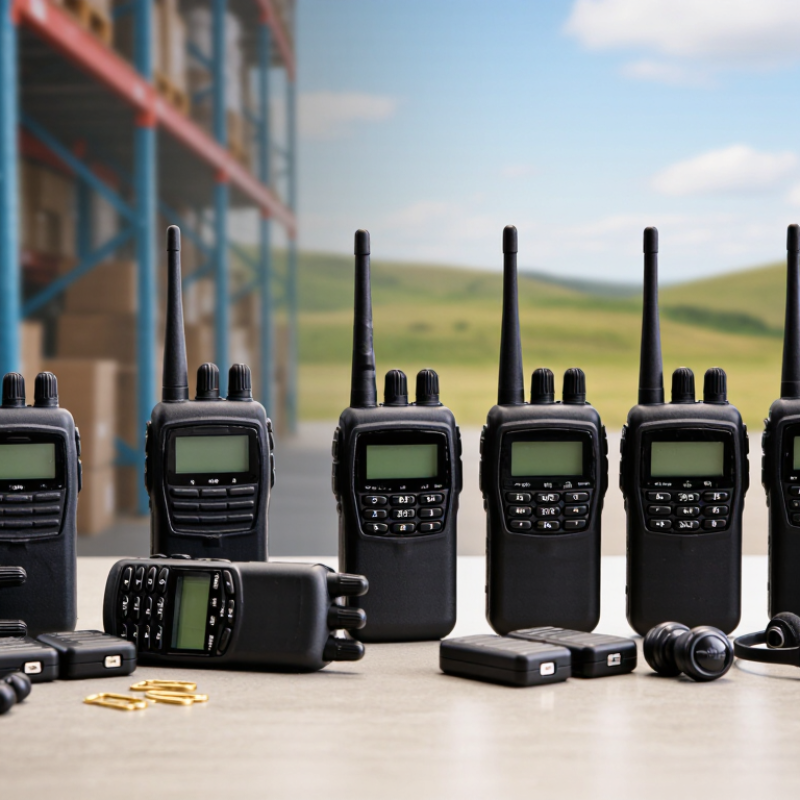
What Are the Best Long Range Walkie Talkies from China?

What Defines a Long-Range Walkie-Talkie?

A long-range walkie-talkie is not defined by one impressive number on its packaging. It is defined by how reliably it carries clear, two-way audio in the conditions where people will use it. Open ground with a clear line of sight can support much longer communication than streets lined with buildings or wooded trails. Hills, walls, vehicle bodies, and even the position of the antenna can reduce usable distance.

That difference matters. A quoted maximum range usually describes favorable conditions, not a promise for everyday use. When comparing radios, look for details about test conditions, transmit power, antenna design, receiver sensitivity, and battery performance. Also consider whether the unit maintains intelligible speech, not merely a faint signal. A practical check is to test two radios along a familiar route, noting where voices become difficult to understand. Repeat the test with people indoors and outdoors if that reflects your use. Results may vary, and one test is not definitive. I would treat any single range figure with caution; it is a rough guide, not a guarantee. Radio frequency use and permitted power levels also differ by location, so verify local requirements before operating a device.

How Do Chinese Walkie-Talkies Extend Communication Range?

Chinese-made walkie-talkies extend useful range through a combination of antenna placement, efficient receivers, and clear line of sight. The radio itself is only part of the link. ITU-R Recommendation P.525-4 gives a useful baseline: at 450 MHz, free-space signal loss is about 85.5 dB over one kilometer. Doubling distance adds roughly 6 dB of loss in that ideal model. Real ground is less forgiving. Terrain matters.

A higher antenna can clear walls, vehicles, and low ridges, often helping more than a small power increase. Keep the antenna upright and unobstructed; test from the actual locations where people will use the radios. ITU-R P.833-10 models additional attenuation from vegetation, but losses vary with foliage and path conditions. A leafy tree line can therefore make a short route unreliable. Not magic. For wider sites, a properly engineered repeater can receive and retransmit signals from an elevated location. Check coverage at ground level, indoors, and around corners, not only on an open road. I would treat advertised maximum range as a best-case figure, not a field guarantee. A simple site survey, with notes on dead spots and antenna positions, is more useful than guessing.

How Frequency Affects Walkie-Talkie Range

Free-space path loss at 1 km for example radio frequencies. Lower loss can help a signal travel farther under otherwise identical conditions.

Values are calculated using the free-space path-loss equation: 32.44 + 20 log₁₀(frequency in MHz) + 20 log₁₀(distance in km). This idealized comparison is not a real-world range test. Terrain, buildings, antenna height and tuning, receiver sensitivity, and permitted transmit power also affect communication range. For better coverage, use a properly tuned antenna, raise it when safe and legal, and seek a clear line of sight.

Which Features Matter When Comparing Chinese Models?

When comparing long-range walkie-talkies from China, look beyond the range printed on the box. Check the stated frequency band, transmit power, receiver sensitivity, antenna design, and battery capacity. These specifications affect performance, but no single number predicts coverage through buildings or hills. The ITU-R P.525-4 free-space method estimates about 84.5 dB of path loss at 400 MHz over one kilometre. That is an idealized calculation, not a real-world range promise. Numbers need context. I would not treat a printed range as a promise; it is the easiest figure to misunderstand.

Also compare practical details: clear channel controls, readable displays, charging options, accessory compatibility, and protection against dust or splashes. Ask whether the manufacturer provides test conditions for its range claims. A receiver’s sensitivity is useful only when measured under comparable conditions. Battery figures need similar scrutiny, since transmit time, standby time, and temperature can change runtime. A small detail matters: can you change channels while wearing gloves?

Tips: Test a sample on your actual route, with buildings and turns included. Record signal clarity and battery use over several hours. Test the route. If a supplier cannot explain its specifications plainly, pause before ordering.

What Are the Best Long Range Walkie Talkies from China? - Which Features Matter When Comparing Chinese Models?

Feature What to compare What to look for Why it matters Important caveat
Real-world range Test conditions and expected terrain Clear, scenario-based range information rather than a single headline distance Buildings, hills, vegetation, antenna position, and interference all affect radio coverage. A manufacturer’s maximum-range figure is not a guaranteed operating distance.
Frequency and authorization Supported frequency band, channel settings, and local approvals A model configured and certified for the country where it will be used Permitted bands, power limits, and licensing rules differ between countries. A device sold for one market may not be legal to operate in another.
Transmit power Rated output power and whether it is selectable Clearly stated, locally compliant power settings More transmit power can help in some conditions, but does not overcome every obstacle. Higher power can use more battery and may require authorization.
Antenna Antenna type, connector, and whether replacement is permitted A well-matched antenna suited to the intended band and use Antenna performance and placement can affect communication quality. An incompatible antenna can reduce performance and may breach local rules.
Battery and runtime Battery capacity, voltage, replaceability, and stated test conditions A replaceable or readily available battery, with runtime details for realistic use Actual runtime depends on transmit time, standby time, power setting, and battery age. Capacity alone does not establish how long a radio will last in use.
Durability and water resistance IP rating, drop testing, and operating-temperature information A documented rating appropriate to the work or outdoor environment Ingress ratings describe tested resistance to dust and water under specified conditions. Water resistance does not mean a radio is suitable for every immersion or impact.
Audio and controls Speaker clarity, microphone quality, buttons, and glove-friendly operation Clear speech and controls that are easy to use in the intended setting A long-distance connection is of little use if messages are difficult to hear or operate. Audio performance is best assessed through independent testing or a hands-on trial.
Compatibility Frequency, channel configuration, signaling, and programming requirements Confirmed compatibility with the radios already in use Radios need compatible settings to communicate; matching channel numbers alone may not be enough. Check the actual frequencies and settings, not only the number of advertised channels.
Charging and accessories Charging method, spare-battery availability, headset support, and included accessories Accessories that are easy to replace and suited to the planned use Convenient charging and available spares can matter during long shifts or trips. Confirm connector and accessory compatibility before purchasing replacements.
Documentation and support Manual quality, compliance documents, warranty terms, and repair options Complete specifications and accessible support in the buyer’s market Clear documentation helps with setup, lawful operation, and troubleshooting. Verify claims and required approvals for the exact model and destination country.

Comparison note: There is no universally “best” long-range radio. Choose a locally compliant model with verified specifications, suitable durability, and performance tested in conditions similar to your intended use.

What Are the Best Chinese Long-Range Walkie-Talkie Options?

Chinese long-range walkie-talkie options usually fall into three groups: compact analog handhelds, digital handhelds, and vehicle-mounted radios. Analog sets can suit simple team communication. Digital models may offer clearer audio and user grouping, but only when all radios share compatible protocols and settings. For a mixed crew, check channel compatibility before comparing advertised range.

Range figures need careful reading. ITU-R Recommendation P.525-4 provides the free-space path-loss method used in radio planning. At 400 MHz over 10 kilometers, that calculation gives roughly 104.5 dB of path loss, even before buildings, trees, or uneven ground are considered. Terrain matters. A rooftop test can look impressive, while the same radios may struggle behind concrete walls. I would not treat a maximum-range claim as a field guarantee.

For practical selection, match the radio type to the site: handheld units for walking teams, or vehicle-mounted equipment for users who need stronger antennas and stable power. Ask for measured range under stated conditions, battery-runtime test details, and receiver sensitivity—not just peak transmission power. Also verify that the model is approved for use on the intended frequencies in your location. Small detail, big difference. One weakness in many buying guides is that they compare headline numbers without describing the test environment.

How Should Buyers Assess Range, Reliability, and Regulations?

What Are the Best Long Range Walkie Talkies from China?

A “long-range” claim is only useful when the test conditions are clear. Ask whether the stated distance was measured across open land, between buildings, or through dense terrain. ITU-R Recommendation P.1546-6 models terrestrial radio propagation from 30 MHz to 4,000 MHz over paths of 1 to 1,000 km. It reinforces an important point: frequency, terrain, and antenna height affect coverage. A clear line of sight may perform well; a concrete stairwell can change the result quickly. Treat headline distance as a starting point, not a promise.

Reliability deserves equal attention. Check battery capacity, charging options, ingress protection, operating temperature, and whether the supplier provides test methods and support documentation. Request a sample and test it at the intended site, including indoors and at the edge of coverage. Results may be uneven. That is useful evidence, not necessarily a product defect. Spectrum rules also differ by country. The ITU Radio Regulations provide an international framework, while national authorities set permitted frequencies, power limits, and equipment approval requirements. Confirm local requirements before purchasing or operating.

Tips: Ask for range tests with terrain and antenna details. Compare received audio and call stability, not distance alone. Keep a written record of the test location, obstacles, and battery condition. Verify that the device’s frequency and approvals match your destination market.