Leave Your Message

China Best Walkie Talkies Long Range for Global Buyers

Global buyers are rethinking portable communication as worksites, resorts, warehouses, and emergency teams become more distributed. The global two-way radio market was valued at approximately USD 9.25 billion in 2023, according to Grand View Research. Its report projects an 8.9% compound annual growth rate from 2024 to 2030. This momentum supports growing interest in China-made Walkie Talkies Long Range, especially for buyers seeking scalable supply, competitive pricing, and configurable features.

Yet advertised distance can mislead. Mountains, concrete walls, dense buildings, weather, antenna design, and local frequency rules affect real performance. A reliable radio should be tested in the buyer’s actual environment. Battery endurance, IP protection, emergency functions, audio clarity, and accessory availability matter just as much. Small details matter.

Motorola Solutions CEO Greg Brown has described the future of public safety as “connected, collaborative and data-driven.” That view applies beyond public safety. Professional users increasingly expect radios to support coordinated teams, clear voice communication, and dependable field information. However, not every long-range model delivers the same result. Some claims depend on open terrain and ideal conditions. This deserves careful review.

China’s manufacturing ecosystem offers broad choices, including analog, digital, dual-band, and network-enabled equipment. The challenge is selecting suppliers with documented testing, stable quality control, and responsive technical support. Buyers should examine certification documents, frequency compatibility, sample performance, warranty terms, and replacement-battery supply. Reports from MarketsandMarkets also identify digital migration and public-safety demand as important two-way radio growth drivers. For global buyers, the best Walkie Talkies Long Range are not simply the radios with the longest printed distance. They are the models that remain usable, compliant, and understandable when conditions become difficult.
China Best Walkie Talkies Long Range for Global Buyers

What Defines a Long-Range Walkie-Talkie for Global Buyers

For global buyers, “long range” is not a single distance printed on a box. It is a field result shaped by frequency, antenna efficiency, transmit power, terrain, and receiver sensitivity. ITU-R P.525-4 calculates about 90 dB of free-space loss at 150 MHz over five kilometres. At 450 MHz, the loss rises to roughly 100 dB. Higher frequencies can therefore lose more energy across the same open path.

Real environments are less forgiving. Concrete walls, parked vehicles, wet vegetation, and hills absorb or scatter radio energy. A practical test may show two kilometres between warehouses, but less than one kilometre inside reinforced buildings. That gap matters. A “30-kilometre” laboratory claim may assume elevated antennas and clear line of sight. Few users work in such conditions.

Global buyers should examine conducted power, antenna gain, channel bandwidth, receiver sensitivity, and battery performance together. ETSI EN 300 296-2 provides a recognized framework for testing land mobile radio transmitter and receiver performance. The test standard improves comparison, but it does not predict every city street or mountain valley. Check local frequency approvals and permitted power before import. Requirements differ by country.

Field evaluation should include a walking test, an indoor test, and a low-battery test. Record voice clarity, not only connection distance. Short messages can survive weak signals; clear speech may not. This is where specifications become human experience. And honestly, range estimates remain imperfect. The most reliable choice is often the radio that performs consistently at your required distance, not the one promising the biggest number.
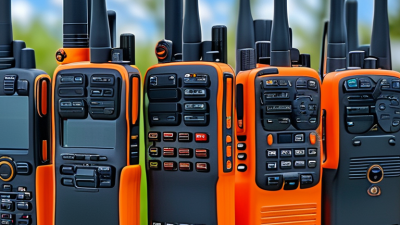
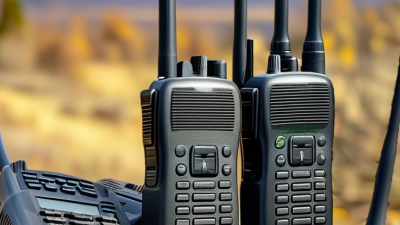
How China-Made Radios Achieve Reliable Long-Distance Communication

Reliable long-distance communication begins before a radio leaves the factory. Chinese manufacturers typically combine receiver sensitivity, transmitter stability, efficient antennas, and carefully tuned firmware. A clear voice at six kilometers depends on more than advertised power. Hills, concrete walls, rain, battery condition, and antenna position can change the result. A radio held near the shoulder may perform better than one buried under a jacket. Small details matter.

Many China-made radios use digital signal processing to reduce background noise and preserve speech when signals weaken. Some models support selectable power levels and channel scanning. Repeaters can extend coverage, but they require authorized frequencies and proper installation. Engineers also check frequency accuracy, heat resistance, charging safety, and drop performance during production. These tests improve reliability, though no factory result can represent every environment.

Specifications are not promises. A radio rated for long range may lose contact behind a warehouse corner. That result may reveal a planning mistake, not hardware failure. Buyers should compare measured range, battery endurance, accessory quality, and local frequency rules. A practical test should include open ground, dense buildings, and low-battery operation. Clear documentation and responsive technical support matter when conditions become inconvenient.

Key Features, Frequencies, and Standards for International Use

Choosing long-range walkie-talkies for international use requires more than comparing advertised distance. In open terrain, a clear line of sight may support several kilometres, while concrete walls, hills, and dense buildings reduce coverage sharply. Test reports from field use often differ from laboratory claims. That difference matters.

Frequency compatibility comes first. PMR446 is widely used in many European markets, while FRS and GMRS rules differ in North America. Other regions may require approved channels, registration, or specific power limits. A radio designed for one market may not be legal or reliable in another. Check local authority guidance before purchase. Look for published frequency ranges, output power, channel spacing, and receiver sensitivity. CE or FCC markings can indicate compliance, but they do not automatically grant permission everywhere. Standards are not interchangeable.

Tips: Carry spare batteries for long shifts, especially in cold weather. Choose USB-C charging for easier travel. An IP-rated casing helps during rain, but the rating may not cover saltwater or heavy impact. Use headsets only when permitted, and keep channel settings documented for every user. In practice, a lower-power radio with a strong antenna and clear audio may outperform a higher-power model in a crowded area. I once underestimated battery drain during repeated transmissions; real testing should include traffic, weather, and building materials. Check the manual carefully. Then verify the rules again before crossing a border.

How to Compare Range, Durability, Battery Life, and Pricing

China Best Walkie Talkies Long Range for Global Buyers

Range claims need careful testing. ITU-R P.525-4 calculates free-space path loss using distance and frequency, but buildings, hills, and wet forests reduce real coverage. A 10-kilometer label may deliver only one or two kilometers in a crowded city. Ask suppliers for test conditions, antenna height, output power, and measured coverage. Independent field tests matter more than packaging.

Durability should match the worksite. IEC 60529 defines IP ratings, while MIL-STD-810H describes environmental testing methods. An IP67 unit resists temporary water immersion, but that does not prove drop resistance. Check impact testing separately. Battery capacity alone also misleads. IEC 61960 measures cells under controlled discharge conditions, not cold weather or heavy transmission. Request runtime data based on a realistic duty cycle, such as 5% transmitting, 5% receiving, and 90% standby. Pricing should include spare batteries, chargers, programming, warranty, and replacement parts. A cheaper unit can become expensive after two seasons. I have seen buyers compare only purchase prices. That is a weak habit. For global purchasing, confirm local frequency rules and charging compatibility before ordering. Some specifications still need independent verification.

China Best Walkie Talkies Long Range for Global Buyers - How to Compare Range, Durability, Battery Life, and Pricing
Product Category Typical Frequency Options Advertised Open-Terrain Range Practical Built-Up Range Durability and Protection Typical Battery Capacity Typical Operating Time Useful Features Indicative Export Price per Unit Best Use Case
Compact Entry-Level Handheld UHF 400–470 MHz or VHF 136–174 MHz 3–5 km 0.5–2 km Basic impact-resistant housing; usually no formal IP rating 1,200–1,800 mAh lithium-ion 8–12 hours under moderate use 16–22 channels, scan function, emergency alarm, removable antenna Approximately US$15–35 Household communication, small shops, events, and light-duty activities
Mid-Range Commercial Handheld UHF 400–470 MHz or VHF 136–174 MHz 5–8 km 1–3 km Reinforced chassis; selected models offer IP54 or equivalent splash and dust protection 1,800–2,500 mAh lithium-ion 10–16 hours under moderate use 32–128 channels, CTCSS/DCS, VOX, programmable side key, charging cradle Approximately US$30–70 Warehouses, construction teams, hotels, security staff, and retail operations
Rugged Professional Handheld UHF 400–470 MHz, VHF 136–174 MHz, or region-specific bands 6–10 km 1.5–4 km Typically IP67-rated; stronger seals, reinforced controls, and resistance to dust and temporary water immersion 2,000–3,500 mAh lithium-ion 12–20 hours under moderate use Wideband or narrowband operation, lone-worker alert, man-down alarm, encryption options, optional remote speaker microphone Approximately US$70–180 Outdoor work, logistics, public venues, emergency support, and demanding industrial environments
Long-Battery Professional Handheld Usually UHF 400–470 MHz or VHF 136–174 MHz 6–10 km 1.5–4 km Often IP55–IP67, depending on configuration; designed for frequent daily use 3,000–5,000 mAh lithium-ion 18–30 hours under moderate use Extended battery, battery-level indicator, programmable channels, low-battery warning, optional spare battery Approximately US$85–220 Multi-shift operations, remote sites, transportation, agriculture, and field service teams
Dual-Band Amateur-Style Handheld Commonly VHF 136–174 MHz and UHF 400–520 MHz 5–10 km in open terrain 1–3 km in urban areas Usually basic or moderate protection; water resistance varies significantly by model 1,800–3,800 mAh lithium-ion 10–18 hours under moderate use Dual monitoring, broad channel memory, FM radio, repeater offset support, computer programming Approximately US$25–90 Outdoor recreation, amateur radio users, backup communication, and technical hobbyists
License-Free Short-Range Set Region-dependent PMR446, FRS, or other license-free bands 1–5 km, depending on local regulations and terrain 0.3–1.5 km Consumer-grade casing; some sets provide basic splash resistance Rechargeable battery pack or 3–4 alkaline/Ni-MH cells 8–18 hours under moderate use Fixed channels, channel scan, hands-free mode, belt clip, USB charging on some models Approximately US$20–60 per pair Family trips, festivals, hospitality, and short-distance personal communication
Vehicle-Mounted Mobile Radio Typically VHF 136–174 MHz or UHF 400–470 MHz 10–30 km with a suitable external antenna 3–10 km, depending on antenna height and buildings Metal or reinforced enclosure; cooling and installation quality affect reliability Powered by a 12 V or 24 V vehicle system Continuous operation while the vehicle is powered Higher transmit power, external antenna connection, remote microphone, channel scanning Approximately US$80–250, excluding antenna and installation Transport fleets, rural operations, security vehicles, and remote work crews
Repeater-Compatible Communication System VHF or UHF, subject to local frequency planning and licensing 10–50+ km with a properly installed repeater Highly dependent on repeater location, antenna height, and network design Handheld durability varies; repeater equipment requires protected installation Handheld batteries typically 1,800–3,500 mAh 12–24 hours for handheld units under moderate use Expanded coverage, group calling, privacy features, dispatch capability, optional digital voice Approximately US$100–400 per handheld; system costs are additional Large facilities, campuses, mines, resorts, municipalities, and dispersed work teams
Comparison notes: Actual range depends on frequency, transmit power, antenna quality, terrain, building density, weather, and legal limits. Battery operating time is commonly measured using an approximate 5% transmit, 5% receive, and 90% standby duty cycle; continuous transmission reduces runtime substantially. Confirm the permitted frequency band, maximum power, channel spacing, conformity requirements, charger type, and warranty terms for the destination market before purchasing.

Choosing the Right China Walkie-Talkie for Different Global Applications

Choosing the Right China Walkie-Talkie for Different Global Applications

China-made walkie-talkies serve construction sites, hotels, logistics teams, event crews, and outdoor workers. The correct model depends on terrain, workload, and local radio rules. According to MarketsandMarkets’ 2024 report, the global two-way radio market is projected to grow steadily through 2030, driven by transportation, public safety, and industrial communication. This growth does not mean every model fits every application.

For warehouses, select UHF radios with strong indoor penetration and clear audio near metal shelving. Construction teams may need dust and water resistance, impact protection, and high-capacity batteries. A radio rated IP67 can survive temporary water immersion, but careless charging can still cause failure. That detail is often missed. For hotels and event operations, lightweight units, discreet earpieces, and simple channel controls usually matter more than maximum range.

Outdoor and rural users should examine VHF performance across open land, while urban teams may prefer UHF for dense buildings. Advertised range is usually measured without walls, hills, or interference. Real-world distance can be far shorter. Independent testing is worthwhile. The 2023 PMR market analysis by Berg Insight also highlights continued demand for digital radio systems, especially where clearer voice quality and data functions improve coordination. Buyers should verify frequency approval, power limits, charger compatibility, and language support in each destination. A technically impressive radio can still become an unsuitable purchase when certification or after-sales testing is overlooked.

The chart shows practical planning ranges commonly associated with different global applications. Actual performance depends on terrain, building materials, antenna height, transmission power, weather, local radio regulations, and network infrastructure. Long-range specifications should therefore be evaluated against the working environment rather than distance alone.