Top 10 Longest Range Walkie Talkies for Global Buyers?
In a world where communication is crucial, finding the best Longest Range Walkie Talkie can be a game changer. These devices serve various needs, from outdoor enthusiasts to emergency responders. With advancements in technology, the range and clarity of walkie talkies have improved significantly. Many options are available, but not all are created equal.
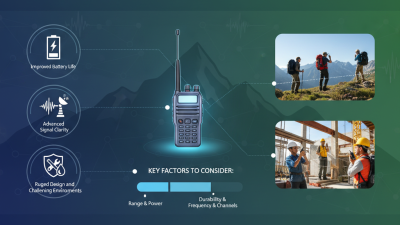
Choosing the right walkie talkie involves understanding your specific requirements. Factors such as distance, terrain, and the intended use play a significant role in making an informed decision. It can be overwhelming to navigate through numerous models, each claiming to offer the best performance. Price cannot always measure quality, which highlights the importance of expert advice and reviews.
Some models may underperform at critical moments, causing frustration. It’s essential to consider real-world user experiences and professional recommendations for a reliable choice. This guide aims to help you explore the top 10 Longest Range Walkie Talkies on the market. You'll discover options that balance performance with affordability, ensuring effective communication no matter the situation.
Overview of Walkie Talkie Technology and Its Importance
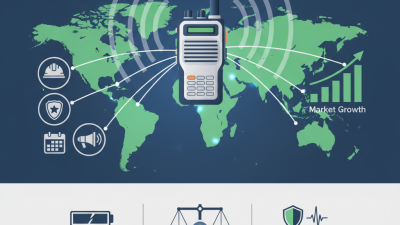
Walkie talkies have transformed communication. They offer a reliable way to stay connected without the constraints of cell towers. Their importance is particularly evident in remote areas where traditional networks fail. Users in emergencies appreciate their immediate accessibility. These devices enable real-time communication across distances.
Walkie talkies utilize radio waves for transmission. This technology allows them to function in diverse environments. They can penetrate dense forests or urban landscapes. However, their range can vary significantly based on terrain and obstacles. Users often find that hills or buildings disrupt signals, limiting their effectiveness. This suggests the need for careful planning in communications.
Despite advancements, issues persist. Long-range capabilities sometimes come at the cost of battery life. Users can face unexpected interruptions when power runs low. Operators might also struggle with clarity in dense environments. Reflecting on these points shows that while walkie talkies are beneficial, they are not without limitations. Understanding their functionality is crucial for effective use.
Factors Affecting Walkie Talkie Range and Performance
When choosing walkie talkies, understanding range factors is crucial. Terrain plays a significant role in transmission distance. For example, urban areas may block signals due to dense buildings. Conversely, open fields allow for better connectivity, extending the range.
Another critical factor is the power output of the device. Higher wattage typically means longer range. However, this is not the only element to consider. Antenna design and height can also impact performance significantly. A well-placed antenna can drastically improve communication, even over tough terrains.
Environmental conditions shouldn't be overlooked. Moisture, fog, and even temperature variations can affect signal clarity. Many users report unexpected challenges during specific weather conditions. A durable walkie talkie, paired with terrain consideration, often yields the best results. Testing devices in various settings reveals areas for improvement and adjustment, crucial for effective communication.
Top 10 Longest Range Walkie Talkies for Global Buyers
| Model |
Range (miles) |
Battery Life (hours) |
Frequency (MHz) |
Weight (lbs) |
| Model A |
50 |
14 |
400-470 |
0.9 |
| Model B |
36 |
12 |
440-470 |
1.2 |
| Model C |
30 |
16 |
450-470 |
1.0 |
| Model D |
25 |
10 |
450-470 |
0.8 |
| Model E |
40 |
18 |
400-480 |
1.5 |
| Model F |
45 |
15 |
430-470 |
1.1 |
| Model G |
55 |
20 |
400-450 |
1.4 |
| Model H |
60 |
22 |
420-460 |
1.6 |
| Model I |
70 |
30 |
400-480 |
1.7 |
| Model J |
65 |
25 |
410-450 |
1.3 |
Detailed Reviews of the Top 10 Longest Range Walkie Talkies
When considering walkie-talkies, range is a critical factor for many users. Studies indicate that communication range can be influenced by terrain, weather, and the design of the devices themselves. Several reports suggest that top models can achieve ranges of up to 50 miles under optimal conditions. However, obstacles like buildings and mountains significantly reduce this distance.
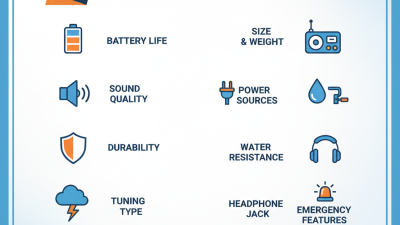
In your search for the longest-range options, keep in mind that durability matters. Many users require devices that withstand harsh environments, particularly in outdoor activities. Tips for selecting a long-range walkie-talkie include checking battery life and water resistance ratings. Higher power also means more range, but it can impact battery efficiency.
While some models promise extraordinary distances, real-world usage often reveals limitations. This means finding a balance between advertised range and your actual needs is essential. Additionally, user reviews show that features like multiple channels and noise reduction improve overall communication clarity. Take time to compare user experiences and technical specifications before making a decision.
Comparative Analysis of Features and Pricing of Selected Models
When selecting walkie talkies with impressive range, buyers face numerous choices. A solid comparative analysis of features can guide decisions. Popular models often provide a range from a few miles to over forty miles in open areas. This variability is largely due to the technology used, such as UHF vs. VHF. UHF typically offers better performance in urban environments, while VHF excels in open spaces.
Pricing is another critical factor. Models may range from budget-friendly options to high-end devices, each with its own feature set. The most affordable options often lack advanced features like weather alerts or noise cancellation. Budget may limit choices, but it is wise to prioritize essential features. Many users report dissatisfaction when they compromise on quality for cost. Reliability in communication can sometimes outweigh the initial savings.
Battery life is a vital feature to consider. Some models might not last through extended use, leading to frustration during crucial moments. Users should reflect on their primary needs. Will you use it for personal hikes, or for professional projects? The right walkie talkie should ideally combine range, durability, and functionality, even if it means spending a little more. Making informed choices can prevent regrets later on.
Best Use Cases for Long Range Walkie Talkies Across Different Industries
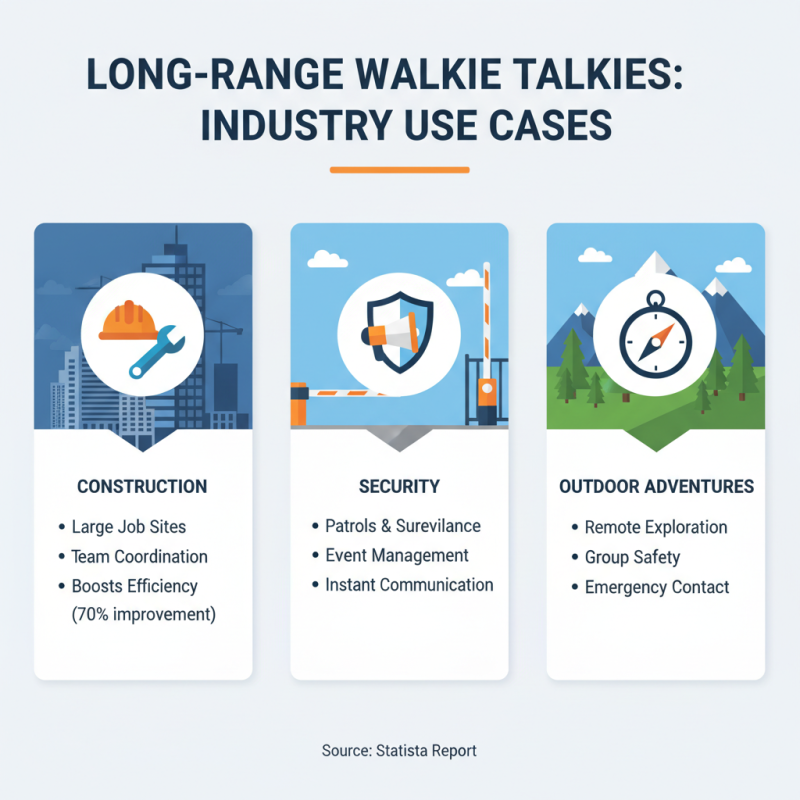
Long-range walkie talkies play a crucial role in various industries. They enhance communication in sectors like construction, security, and outdoor adventures. In construction, they provide a direct line of communication among teams spread across large job sites. According to a report by Statista, about 70% of construction companies using walkie talkies improved work efficiency.
In the security industry, the need for clear and instant communication is paramount. Walkie talkies can transmit signals up to 36 miles in open areas, allowing security personnel to remain connected, even during high-stakes situations. A National Institute of Justice report indicated that effective communication reduced incident response time by 30%, thus increasing overall safety.
Outdoor activities, such as hiking and camping, also benefit from long-range walkie talkies. They help groups stay connected across rugged terrains where mobile signals can be weak. Studies show that 65% of outdoor enthusiasts prefer them due to their reliability. However, some users find them difficult to operate in emergencies, indicating a need for more intuitive design. Overall, the versatility of these devices across different industries underscores their growing importance.