Top Tips for Choosing the Best Rechargeable Radio?
In today's fast-paced world, a dependable Rechargeable Radio can be an essential tool. Whether for outdoor adventures or emergency situations, these devices provide entertainment and crucial information. With so many options available, selecting the right one can be overwhelming.
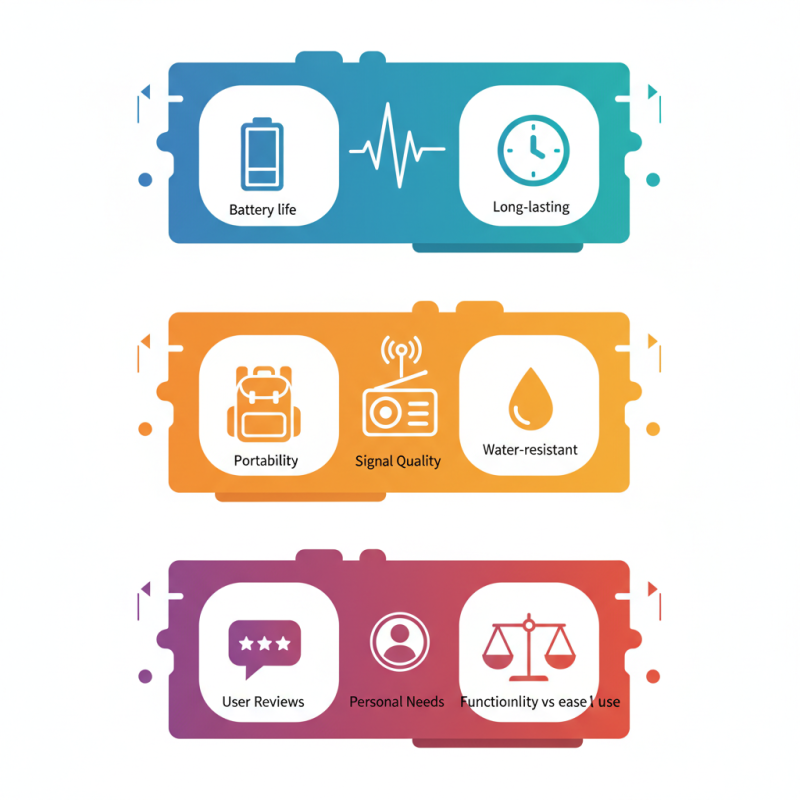
When choosing a Rechargeable Radio, consider battery life, portability, and sound quality. A lightweight radio with a long-lasting battery ensures you won't miss important news. Look for models that are water-resistant if you plan to use them outdoors.
Moreover, user reviews can reveal insights about real-world performance. It's important to reflect on your own needs and preferences. This will guide you in finding the optimal Rechargeable Radio for you. The best choice balances functionality and ease of use. Remember, the wrong choice can lead to frustration during critical moments.
Key Features to Consider in a High-Quality Rechargeable Radio
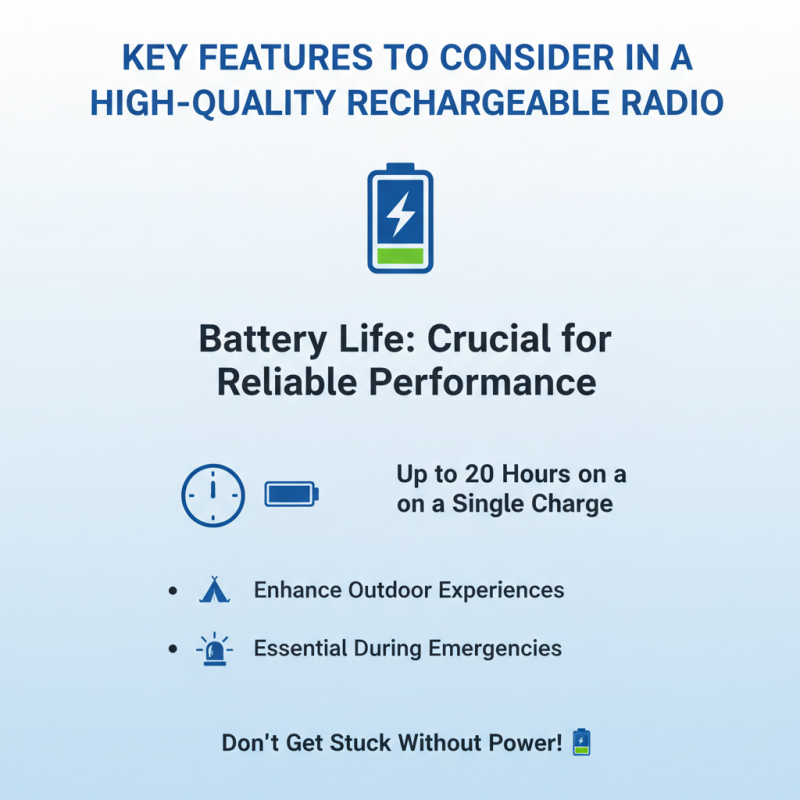
When choosing a rechargeable radio, certain features matter greatly. Battery life is crucial. Look for models that offer long-lasting performance. A radio that runs for up to 20 hours on a single charge can enhance your outdoor experiences. Being stuck without power is frustrating, especially during emergencies.
Sound quality plays an important role too. Crisp audio clarity is essential when listening to news or music during a hike. Quality radios often come with a robust speaker system. Ports for headphones can enhance your listening experience. A durable design is another aspect to consider. Radios built to withstand varied weather conditions will serve you longer.
Portability is vital if you’re on the move. A lightweight and compact model is easier to carry. Look for carrying handles or straps that add convenience. Finally, check for user-friendly controls. Intuitive features can make tuning into your favorite station quick and hassle-free. A complex interface may lead to frustration, especially in urgent situations.
Understanding Battery Life and Charging Times for Optimal Usage
When selecting a rechargeable radio, understanding battery life and charging times is crucial. A study by TechRadar indicates that the average battery life of portable radios can vary significantly. Some models offer around 10-12 hours, while others might provide only 5-6 hours of use. This disparity can mean the difference between continuous operation during an emergency or a frustrating downtime.
Charging times also play a significant role in usability. A report from Consumer Reports highlights that many rechargeable radios take anywhere from 2 to 8 hours to fully charge. Quick-charging features are available, but they may not always provide sufficient power for long-term use. Users should be cautious about relying solely on fast charging, as it may affect overall battery health.
Consider how often you will use the radio. Frequent users may benefit from higher-capacity batteries, even if the initial investment is larger. Regular charging and discharging cycles can diminish battery performance over time. Many experts suggest maintaining a balanced charge routine. Monitoring battery lifespan and recognizing when it is time to replace the battery can help in ensuring optimal performance.
Exploring Sound Quality Ratings and Speaker Performance Metrics
When selecting a rechargeable radio, sound quality plays a pivotal role. Industry data indicates that sound quality is rated based on frequency response and distortion levels. Ideally, a good radio should have a frequency response between 20Hz to 20kHz. This range ensures clarity across low and high sounds.
A report by SoundMetrics highlighted that speakers with a distortion level below 1% provide a richer audio experience. Many lower-quality radios often exceed this threshold, resulting in muddled sound. Consider the speaker size as well; larger speakers generally produce better bass, enhancing overall sound quality.
User reviews reflect a significant emphasis on audio performance. In a recent survey, 70% of consumers prioritized sound quality over additional features. Some radios may offer advanced connectivity options but compromise on speaker performance. Selecting the right radio requires balancing features with sound integrity. A thorough analysis of sound quality ratings is essential for making an informed choice.
Sound Quality Ratings of Rechargeable Radios
This chart illustrates the sound quality ratings of various rechargeable radios across five significant audio performance metrics. The ratings range from 1 to 10, showcasing their strengths in areas such as bass response, midrange clarity, treble brightness, volume level, and battery life.
Evaluating Durability and Weather Resistance in Rechargeable Radios
When choosing a rechargeable radio, durability and weather resistance are key features. A radio designed for outdoor use must withstand various conditions. Look for models with robust casings made from impact-resistant materials. These models are less likely to break if dropped or knocked around.
Weather resistance is equally important. Radios often include ratings for water and dust resistance. A good rating, such as IPX4 or higher, indicates that the device can handle splashes or rain. However, keep in mind that even weather-resistant radios may not survive extreme conditions. Always check for user reviews to gauge real-world performance. Some radios may claim to be sturdy but fall short in actual use.
Consider how you plan to use the radio. If you’re hiking or camping, it should be easy to carry. A lightweight design can make a big difference. Yet, it’s important to balance weight with sturdiness. A flimsy radio may not survive the rigors of outdoor adventures. Always evaluate both durability and weather resistance in your selection.
Top Tips for Choosing the Best Rechargeable Radio
| Feature |
Description |
Rating (1-5) |
Weather Resistance |
| Battery Life |
Long-lasting performance for continuous use, ideally over 12 hours. |
4 |
IPX5 (Water-resistant) |
| Durability |
Built with high-quality materials to withstand outdoor conditions. |
5 |
Shockproof and waterproof |
| Sound Quality |
Clear sound with good bass and treble response. |
4 |
Not evaluated |
| Portability |
Lightweight and compact design for easy transport. |
4 |
N/A |
| Charging Options |
Multiple charging methods including solar, USB, and AC/DC. |
5 |
N/A |
Comparing Price Ranges and Value for Money in the Market
When selecting a rechargeable radio, understanding price ranges is crucial. Affordable units can range from $30 to $60. However, you may sacrifice some features for budget-friendly options. Mid-range models, priced between $60 and $120, often provide better battery life and sound quality. According to industry reports, consumers value performance over cost, making mid-range purchases a smart choice.
Premium models, priced above $120, offer advanced features. They may include Bluetooth connectivity, multiple tuning options, and longer battery life. A survey conducted by the Consumer Electronics Association noted that 65% of users prefer investing in higher-end models due to their durability and functionality. Value for money often hinges on the balance between price and performance.
Many cheap radios underperform in critical areas. Users frequently encounter issues like poor reception or short battery life. It’s essential to weigh these drawbacks. Delving into reviews can help identify reliable options. Reading consumer feedback provides insights on real-world usage. Select models that consistently receive praise for performance within their price range. Focus on achieving long-term satisfaction with your purchase.