Why Choose Battery Powered Radios for Global Buyers?
Why Choose Battery Powered Radios for Global Buyers?
A Battery Powered Radio remains a practical communication tool when electricity, mobile networks, or internet access becomes unreliable. The need is global. The International Telecommunication Union reported that 2.6 billion people remained offline in 2023. In remote communities, a simple radio can deliver weather warnings, public announcements, and local news without a data plan.
Emergency preparedness agencies also support this approach. Ready.gov recommends including a battery-powered or hand-crank radio in household emergency kits. NOAA states that its Weather Radio network provides coverage to about 95% of the United States population. These figures do not represent every market, but they show the continuing value of independent broadcasts.
Craig Fugate, former administrator of the U.S. Federal Emergency Management Agency, has described emergency information as “a life-safety issue.” His observation explains why buyers examine radios beyond price. Battery life, reception range, frequency compatibility, speaker clarity, and durable housing all matter. A radio sitting in a humid storage room must still work months later.
Global buyers also face practical differences. Broadcast standards vary between countries. Replacement batteries may be difficult to find. Some models advertise impressive range, yet buildings and terrain reduce actual performance. No device is perfect.
This article explores why Battery Powered Radio products remain relevant for households, outdoor users, retailers, and resilience-focused organizations. It considers evidence, product design, and real purchasing conditions. The analysis also recognizes a limitation: radio cannot replace every digital service. However, when the screen is dark, its usefulness becomes difficult to ignore.
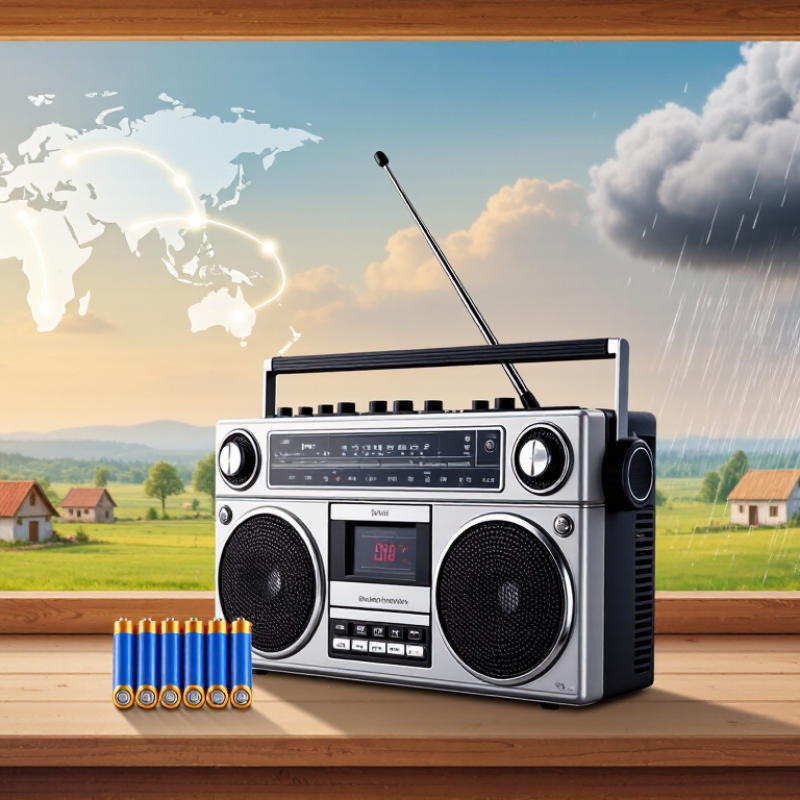
What Battery-Powered Radios Are and How They Work
Battery-powered radios receive and transmit audio without relying on a wall outlet. They use direct-current energy from disposable or rechargeable cells. The battery powers an electronic circuit, which processes radio signals through carefully tuned frequencies. For listening, the antenna captures electromagnetic waves from nearby or distant stations. The receiver filters unwanted signals, extracts the audio, and sends it to a speaker.
The process is quite practical. A microphone changes speech into electrical signals in a two-way radio. A transmitter then places those signals onto a radio carrier wave. The antenna releases the wave through the air. On the receiving side, another antenna collects it, while the circuit separates speech from the carrier. The speaker converts that signal back into sound. Clear communication depends on distance, obstacles, antenna design, and local interference.
Battery choice affects everyday reliability. Alkaline cells often suit occasional use, while rechargeable cells can reduce repeated replacement. Runtime changes with volume, transmission strength, temperature, and battery age. A cold morning may shorten operating time noticeably. Check the compartment for leakage before storage. Keep spare batteries sealed and dry. Simple habits matter.
In practical testing, advertised runtime can feel optimistic. Manufacturers may measure it at low volume or limited transmission time. That deserves careful attention. Buyers should compare operating voltage, charging methods, frequency compatibility, and emergency features. A bright display is useful, but efficient circuitry usually matters more when power is limited.
Key Benefits for Communication During Power Outages
Why Choose Battery Powered Radios for Global Buyers?
During a power outage, a battery powered radio can provide updates when Wi-Fi and mobile networks become unreliable. It receives local emergency announcements, weather warnings, and public safety information without requiring a wall outlet. The sound may be less clear in a concrete basement, but moving near a window often improves reception. This simple action can matter when every minute feels uncertain.
For global buyers, radio compatibility deserves careful attention. Check whether the unit supports the AM, FM, or weather frequencies used in your region. A clear tuning dial, strong speaker, and low battery consumption improve practical use. Keep spare batteries in a sealed container, away from heat and moisture. Test the radio every few months. Many people forget this step, and dead batteries can turn useful equipment into silent plastic.
Tips: Store the radio with a flashlight and written emergency contacts. Label the spare batteries with their purchase date. During an outage, reduce volume when possible and listen at scheduled intervals. Avoid placing the radio beside large metal objects, which may weaken reception. A hand-crank feature can provide backup power, but it should not replace fresh batteries. Some models advertise long standby times, yet real performance changes with temperature, signal strength, and battery age. That limitation is easy to overlook.
Why Choose Battery-Powered Radios for Global Buyers?
Battery-powered radios can continue receiving emergency information when electricity, mobile networks, or internet services are unavailable. The chart compares the approximate nominal energy available from common portable power sources. Higher energy capacity generally supports longer operation, although actual runtime depends on radio efficiency, volume, signal strength, and battery condition.
Reference basis: approximate nominal energy calculated from commonly specified voltage and capacity values: energy (Wh) = voltage (V) × capacity (Ah). Actual usable energy varies by battery chemistry and device design.
Important Features for Different Global Environments
Battery-powered radios remain useful when power grids fail, travel routes change, or mobile signals disappear. For global buyers, the best choice depends on local conditions, not appearance alone. A radio used in a humid coastal town needs better moisture protection than one kept indoors. A model for cold mountain travel should operate reliably with reduced battery performance.
Start with power flexibility. Models using common replaceable batteries are practical in remote markets. Rechargeable cells reduce waste, but they still need a dependable charging method. Solar panels and hand cranks can provide backup power. They are helpful, though often slower than expected. Test them before an emergency.
Reception also matters across regions. Check whether the radio supports the broadcast bands used in the target country. Strong sensitivity helps in rural areas, while clear tuning reduces interference in crowded cities. A telescopic antenna should feel firm, not loose. Small details matter. Weather alerts may not operate everywhere, so buyers should verify local coverage instead of trusting general packaging claims.
Environmental design deserves close attention. Look for a clearly stated water-resistance rating, sealed controls, and a textured grip for wet hands. Dust protection helps in deserts, farms, and construction zones. A bright display supports nighttime use, but excessive brightness can drain batteries. I once underestimated speaker clarity in strong wind. Loudness alone was not enough; voice quality mattered more. Reliability comes from checking these details in realistic conditions.
Buying, Maintaining, and Using Radios Across Regions
Why Choose Battery Powered Radios for Global Buyers?
Buying, Maintaining, and Using Radios Across Regions
Battery powered radios suit buyers who travel, work remotely, or manage uncertain power supplies. They remain useful during blackouts, field inspections, and outdoor operations. Before buying, check the radio’s frequency coverage and charging options. Regional broadcasting standards can differ, so a model working well in one country may perform poorly elsewhere. Confirm local requirements through official communications authorities. This small step prevents expensive mistakes.
Choose common battery sizes when possible. They are easier to replace across different regions. Rechargeable batteries reduce waste, but keep spare disposable cells for emergencies. Store batteries separately from the radio during long periods of inactivity. Heat can shorten battery life, especially inside a parked vehicle. I have found that simple storage habits matter more than advanced features. Still, users often forget them.
Tips: Test the radio before travel. Write down battery types. Carry a suitable plug adapter. Clean the battery contacts with a dry cloth, and inspect them for corrosion. Keep the antenna extended when reception is weak. Buildings, hills, and storms can interrupt signals. Do not assume every station broadcasts in your preferred language. Listening conditions also change by region. A practical trial at home is helpful, though it cannot reproduce every field problem. Always follow local operating rules, especially when the radio can transmit rather than only receive.